

From the studio
Scalp Micropigmentation for Women: The Honest Guide
A widening parting and more scalp catching the light, but your hairline hasn't moved? That's the classic pattern of female hair loss. What causes it, the medical options first, and when density SMP genuinely helps.
If you have noticed your parting looking wider than it used to, or more scalp catching the light at the crown in a photo taken from above, you are looking at the classic pattern of female hair loss. It is more common than most women realise, it is rarely talked about openly, and it is not the same thing as the postpartum shedding that settles down on its own within a year. This is a plain, honest guide: what is actually happening, the medical options that come before any cosmetic treatment, and when scalp micropigmentation genuinely earns its place.
The short answer
A widening centre parting with the hairline itself staying more or less where it always was is the textbook pattern of female hair loss, medically called female pattern hair loss (FPHL). Topical minoxidil is the licensed first-line treatment and worth trying before anything cosmetic. Density scalp micropigmentation, which adds pigment between the hairs you still have rather than shaving the head, is a real option once you understand the pattern, not the first thing to reach for.
What is female pattern hair loss?
The British Association of Dermatologists describes female pattern hair loss, also called androgenetic alopecia, as “the most common type of hair loss in women”. The BAD’s patient leaflet sets out exactly how it presents: “diffuse thinning of the hair, mainly over the top of the scalp, the mid part line becomes more visible and widened. The hairline at the front of the scalp often remains normal.” DermNet NZ draws the same contrast with male pattern loss, which “typically begins with a receding hairline progressing to crown baldness,” where FPHL instead “involves diffuse thinning across the scalp while preserving the frontal hairline.”
In plain terms: your hairline is unlikely to be the tell. The parting, the crown and the general density across the top of your head are where you will actually see the change first.
There is a named variant worth knowing, described in a peer-reviewed review in the International Journal of Endocrinology and Metabolism: alongside the classic Ludwig pattern of diffuse crown thinning, some women develop what dermatologists call the “Christmas tree pattern”, where the frontal midline widens into a triangular shape rather than spreading evenly. Both are the same underlying process; they just show up slightly differently on the scalp.
This is a different picture from postpartum shedding, which is usually temporary and settles within a year of giving birth, so it is worth ruling that out first if your thinning started shortly after having a baby.
How female pattern hair loss is staged
- Ludwig scale, 1 to 3: the standard classification, describing increasing diffuse thinning across the crown while the frontal hairline stays largely intact.
- The rarer "Christmas tree" pattern: frontal widening in a triangular shape, first described by Olsen, alongside or instead of the classic Ludwig pattern.
- What it is not, usually: a receding hairline. That pattern is far more typical of male pattern loss.
- The male equivalent: the Norwood-Hamilton scale grades male pattern loss the same way Ludwig grades female pattern loss, just mapped to a different, receding pattern.
What causes female pattern hair loss, and how common is it?
Female pattern hair loss is far more common than the silence around it suggests. DermNet NZ puts it at around 40% of women showing signs by age 50, and it becomes noticeably more common after menopause. Harvard Health, published April 2024, goes further: roughly a third of women experience some hair loss at some point in their lives, rising to as many as two-thirds of postmenopausal women dealing with thinning or bald spots. The peer-reviewed IJEM review puts real numbers against the age curve too, citing incidence around 12% in women in their thirties, climbing to 30 to 40% among women in their sixties.
The cause is a mix of genetics and hormones, and the BAD notes it “can be inherited from either or both parents”. Here is the part most guides skip: despite the name, DermNet NZ is clear that “the majority of women with FPHL have normal levels of androgens in their bloodstream.” You do not need a hormone imbalance to develop it. That said, there is a real link with PCOS worth knowing about plainly. A peer-reviewed meta-analysis in JAAD International (August 2025), pooling data across thousands of women, found roughly 32% of women with FPHL also have PCOS, and women with FPHL show close to 5.5 times higher odds of polycystic ovaries than women without it. The certainty of that evidence is rated low to very low by the study’s own authors, so treat it as a worth-mentioning-to-your-GP association rather than proof that PCOS is driving your particular case.
What we would say at a consultation
If your thinning came on suddenly, in patches, or alongside other symptoms like fatigue or irregular periods, that is worth a GP visit before anything else, cosmetic or medical. Steady, gradual thinning over a widening parting is the far more common pattern, and it is the one this guide is written for.
The full option set: what to try before SMP, said plainly
This is the part most SMP clinic pages skip entirely, and it is exactly why we are including it. Before you get anywhere near a cosmetic treatment, there is a real medical route worth knowing about, because for some women it works well on its own.
Topical minoxidil is the licensed first-line treatment. The NHS names minoxidil explicitly for female pattern baldness, and the BAD confirms it as first-line at 2% or 5% strength, applied daily. The peer-reviewed IJEM review calls it “the only medication approved for FPHL” in the strict licensing sense, used for a minimum of twelve months before judging the result. It will not work for everyone, and the benefit reverses if you stop using it, but it is the starting point a dermatologist would actually recommend.
Finasteride is explicitly not for women. This trips a lot of people up because it is well known as a male hair-loss treatment. The NHS is direct about it: “Women should not use finasteride.” If you have seen it suggested online for female pattern loss, that is not the UK’s own medical guidance.
Prescription anti-androgens exist, but they are GP or dermatologist-led. The BAD lists off-label options including low-dose oral minoxidil, spironolactone, cyproterone acetate and others, all prescription-only and generally used where a specialist judges the benefit outweighs the side effects. The IJEM review is candid that “there is not enough evidence-based data to support the routine use of antiandrogens in FPHL,” so this is a considered decision with a doctor, not a default next step.
A GP will usually check iron and thyroid too. Harvard Health flags correcting an iron deficiency as part of the standard medical work-up for hair thinning, since low iron and thyroid problems can both worsen shedding independently of pattern loss. It costs a blood test to rule out, and it is worth doing before assuming the cause is purely genetic.
None of this is available at a SMP studio, and it should not be. We are not a medical clinic, and if there is a treatable cause behind your thinning, a GP is the right first call.
Is density or full-head SMP better for women?
Once you have looked at the medical route, whether that means you tried it, are already on it alongside wanting the visual result sooner, or have decided daily treatment is not for you, this is where scalp micropigmentation becomes worth a proper look. It sits outside the medical list entirely because it is cosmetic. The NHS lists “permanent make-up (micropigmentation)” plainly among cosmetic options for hair loss, describing it as a “tattoo used to look like short hair”. It does not stimulate follicles, does not stop the underlying loss, and does not replace the medical work-up above; it changes how the scalp looks, not what is happening beneath the skin.
Suitability is worth raising honestly too. Pigment is colour-matched to your own hair at consultation, whatever your skin tone or hair colour, so that is worked out in person rather than assumed from a blog post. If you are prone to keloid scarring, or have an active scalp condition such as psoriasis or eczema, say so early, as those can shape timing or rule the treatment out for now rather than change the technique itself.
Here is the nuance that matters and that most competitor pages get vague about: density SMP is the right service for the classic FPHL presentation, not full-head SMP. Because your hairline usually stays put and your existing hair still covers most of the scalp, the job is to reduce the contrast between hair and scalp between the hairs you already have, not to recreate a shaved-head look the way full-head SMP does for a man with an established bald pattern. Density SMP places tiny pigment impressions among your existing hair so the parting reads narrower and the crown shows through less, without shaving anything. It is the same principle we use for crown thinning, just applied to a diffuse, whole-top pattern rather than one bald patch.
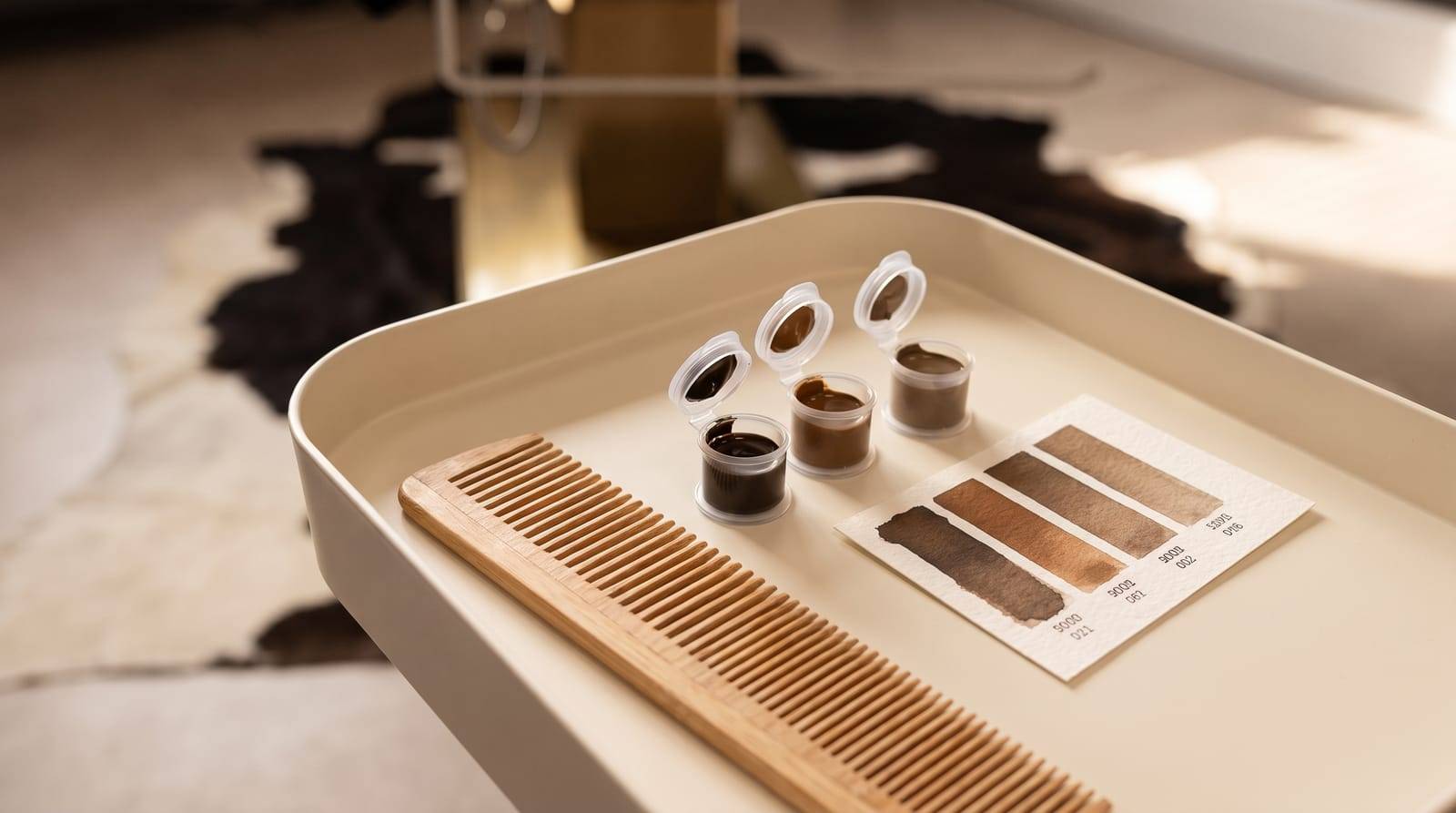
You do not need to shave your head for this to work. That distinction alone rules SMP in or out for most women faster than anything else.
Practically, that means our Female Density Treatment is built for this pattern specifically - the same principle covered from a broader angle in who scalp micropigmentation on long hair actually suits, and it is why we would steer a widening-parting client toward density rather than the full-head service designed for a fully bald male scalp. If you are unsure which category your own thinning falls into, that is precisely what a consultation sorts out, and it is worth reading what one density session can realistically achieve before you come in, or seeing what a genuine before-and-after actually shows so you know what to look for.
| Density SMP (widening parting, thinning across the top) | Full-head SMP (established, fully bald pattern) | |
|---|---|---|
| Who it suits | Existing hair still covers most of the scalp; the parting or crown shows more skin than it used to | A completely or near-completely bald scalp |
| What it does | Reduces hair-to-scalp contrast among the hair you have | Recreates the look of a closely-shaved head |
| Do you shave first? | No | Usually, for an even match |
| Typical for FPHL | Yes, almost always | Rare in FPHL; this is the male pattern-loss route |
What a consultation actually covers
A free consultation is a proper look at your scalp, not a sales pitch. We would talk through how your thinning has progressed, whether you have tried or want to try minoxidil first, what result is realistically achievable given how much hair you still have to blend among, and whether density SMP or something else entirely is the right answer for you. Our Female Density Treatment starts from £600, run over 2 to 3 sessions of roughly 4 hours each, spaced out to let the scalp settle between sessions and to build the result gradually rather than all at once. Durability is commonly quoted across UK clinics at 1 to 5 years before it needs attention, with most people finding a refresh worth having every 2 to 3 years, so it is long-lasting rather than a one-off forever fix.
The bottom line
A widening parting and a hairline that has not moved is the classic pattern of female hair loss, and it is far more common than the silence around it suggests, not something to be embarrassed about. Start with the medical route if regrowth matters to you: topical minoxidil first, a GP conversation about iron and thyroid, and a specialist referral if you want to explore the prescription options. If you have done that, or you have decided a daily routine is not for you, and what you actually want is for the thinning to simply stop showing, density scalp micropigmentation is a real option built for exactly this pattern, not a fully-shaved look borrowed from the men’s service. The surest way to know which side of that line you fall on is a proper look at your own scalp, not a blog post. A free consultation is the honest way to find out, and reading is scalp micropigmentation right for you or comparing it with density SMP results after one session is a good next step before you come in.
More from the blog
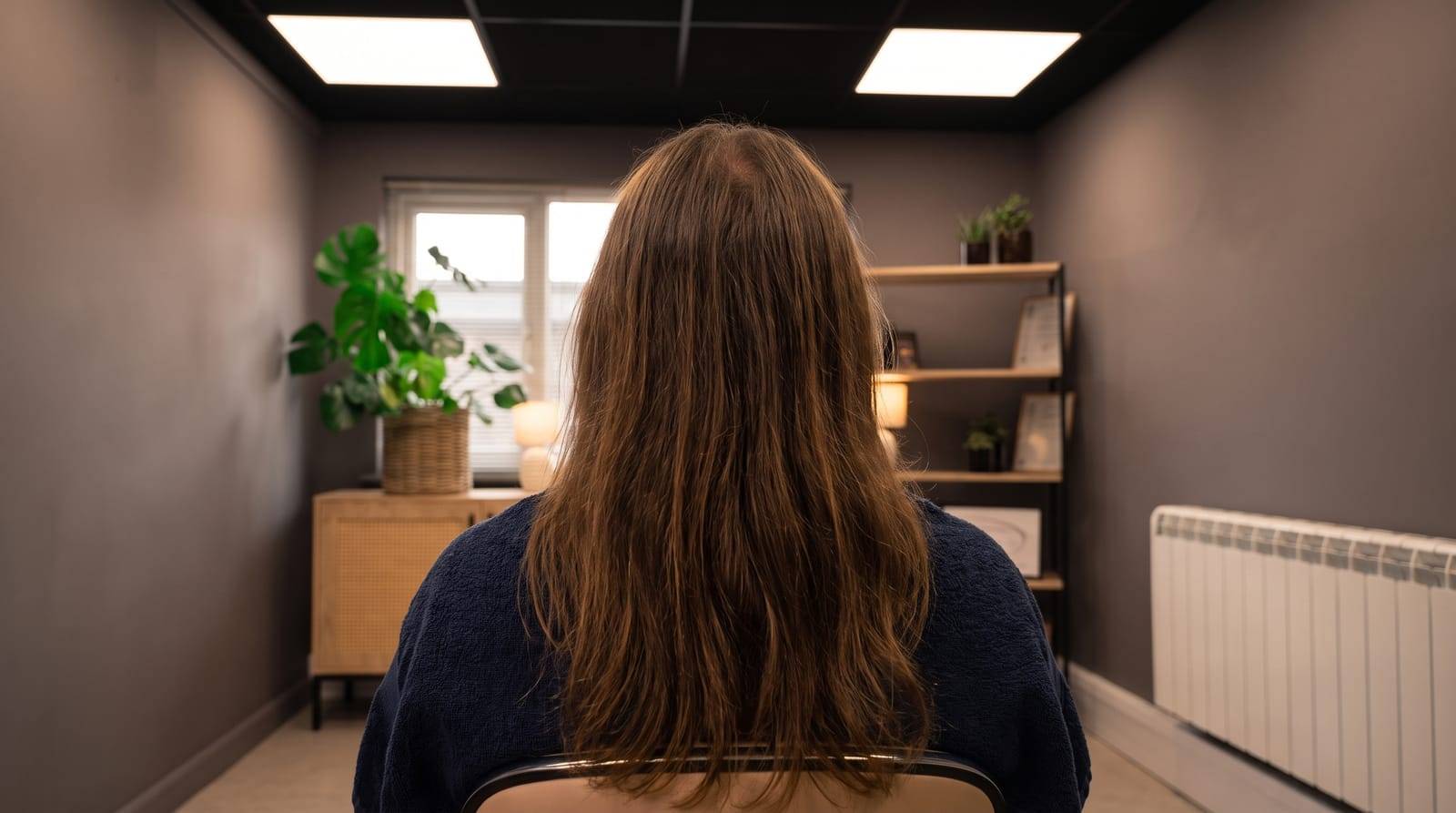
Scalp Micropigmentation on Long Hair: Who It Actually Suits
Scalp micropigmentation used to mean shaving your head. Density SMP works differently, placing pigment between your existing strands. Here's who it genuinely suits, honestly.
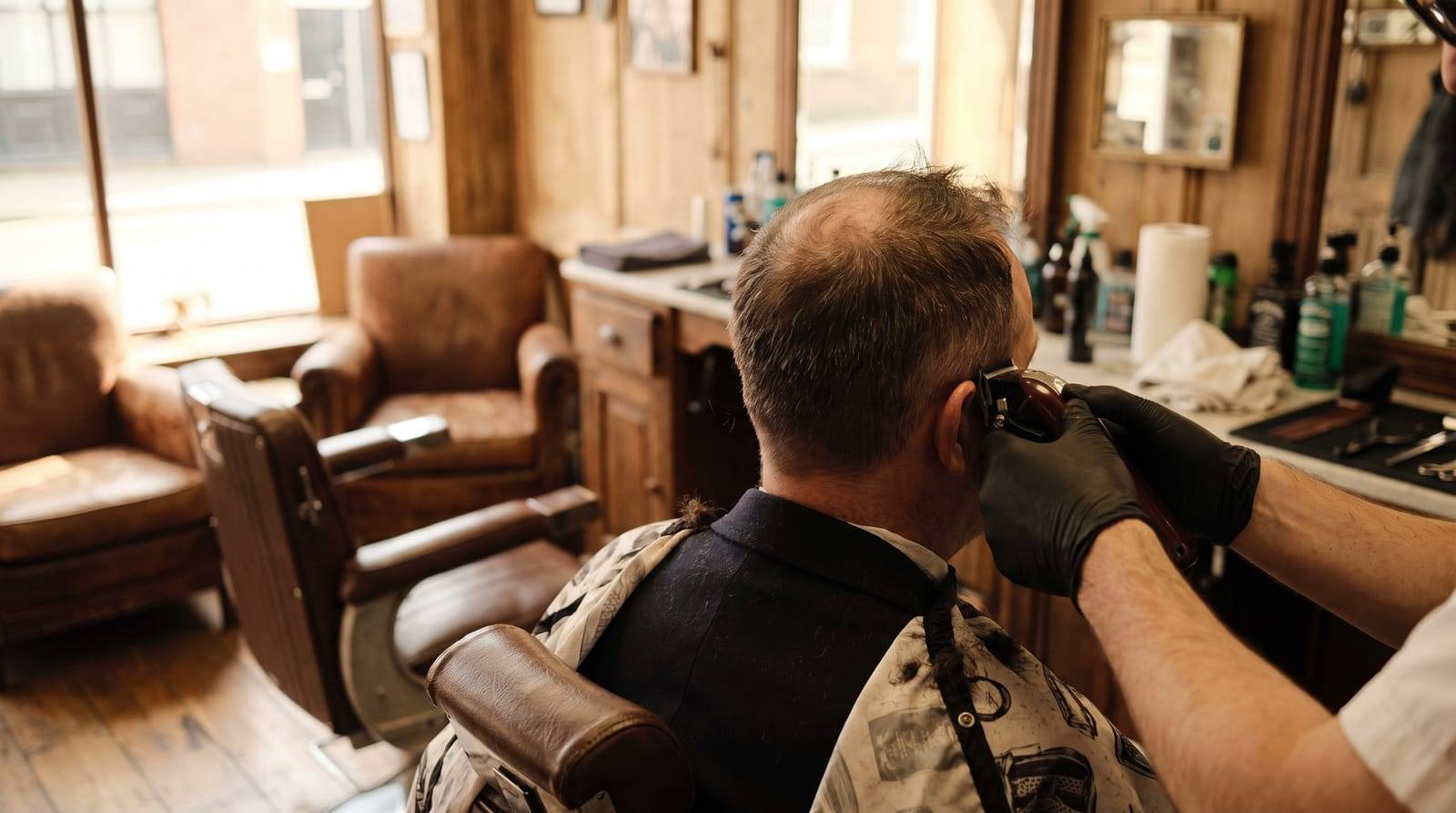
Hairstyles for Thinning Hair (Men): A Barber-Honest Guide
The right haircut can make thinning hair look genuinely thicker, before you touch a single product. Here is which cut suits your pattern, which ones make it worse, and the honest point where a haircut stops being enough.

Shaving Your Head When You're Balding: The Honest Guide
Thinking of shaving it all off now the hair is going? Often the right call, but a balding head shaved down can look patchy: dense at the sides, bare on top. Here is the honest guide to the two looks and where SMP fits.
Common questions
Is scalp micropigmentation worth it for women?
For the right woman, yes. If your parting has widened, more scalp is catching the light at the crown, and you have already looked at (or tried) the medical route, density SMP is one of the few options that reliably reduces the hair-to-scalp contrast without daily products. It is not worth it if you are hoping to regrow hair, because it is cosmetic and does not touch the underlying cause. The honest test is whether you want your hair back or simply want the thinning to stop showing.
How much does scalp micropigmentation cost for women?
Our Female Density Treatment has a clear published from-price on our prices page, typically over 2 to 3 sessions of around 4 hours each. UK clinics we checked when researching this piece quote from roughly £500 upwards for the female-specific service, so ours sits within the normal range. The amount of thinning changes how much work is involved, so the only way to get a number for your own scalp is a free consultation.
What are the downsides of scalp micropigmentation?
The honest ones: it does not grow hair, so it will not touch the underlying cause of your thinning. It fades slowly over time and needs an occasional touch-up. It suits a look where your hair still covers the pigment, so it is not designed for hair you plan to wear very short or scraped back and exposed. As with any tattoo-type procedure, there is a small risk of an allergic reaction to the pigment or infection if aftercare is not followed properly, which is why we do a patch test and give clear aftercare instructions. And the quality varies hugely between practitioners, so a rushed or poorly colour-matched job is the main real risk, far more than the pigment itself.
How long does scalp micropigmentation last?
It is commonly quoted across UK clinics at 1 to 5 years before it needs attention, with most people finding a refresh worth having every 2 to 3 years. It fades gradually rather than all at once, so there is no fixed expiry date, and how quickly yours fades depends on your skin, sun exposure and how the pigment was placed originally.
What is a good age for scalp micropigmentation?
There is no fixed age, and we have treated women from their late twenties into their seventies. What matters more is whether your thinning has settled into a stable pattern you can plan a result around. Female pattern hair loss can start in your thirties or forties but becomes far more common from your fifties onward, and a consultation is the way to work out whether now is the right time for you specifically, not a birthday.
Does hair grow back after scalp micropigmentation?
No, and we would rather tell you that plainly than let you find out later. SMP does not stimulate the follicle or change what is happening under the skin; it deposits pigment to recreate the appearance of density between the hairs you still have. If regrowth is genuinely what you want, that is a conversation for your GP about minoxidil or the other medical options first, not for us.
Thinking about scalp micropigmentation?
Book a free, no-obligation consultation. We'll talk through your hair openly - no guarantees and no medical claims, just a clear idea of whether SMP is right for you.
Book a free consultation