
Compare your options
SMP vs Hair Transplant: Which Is Right for You?
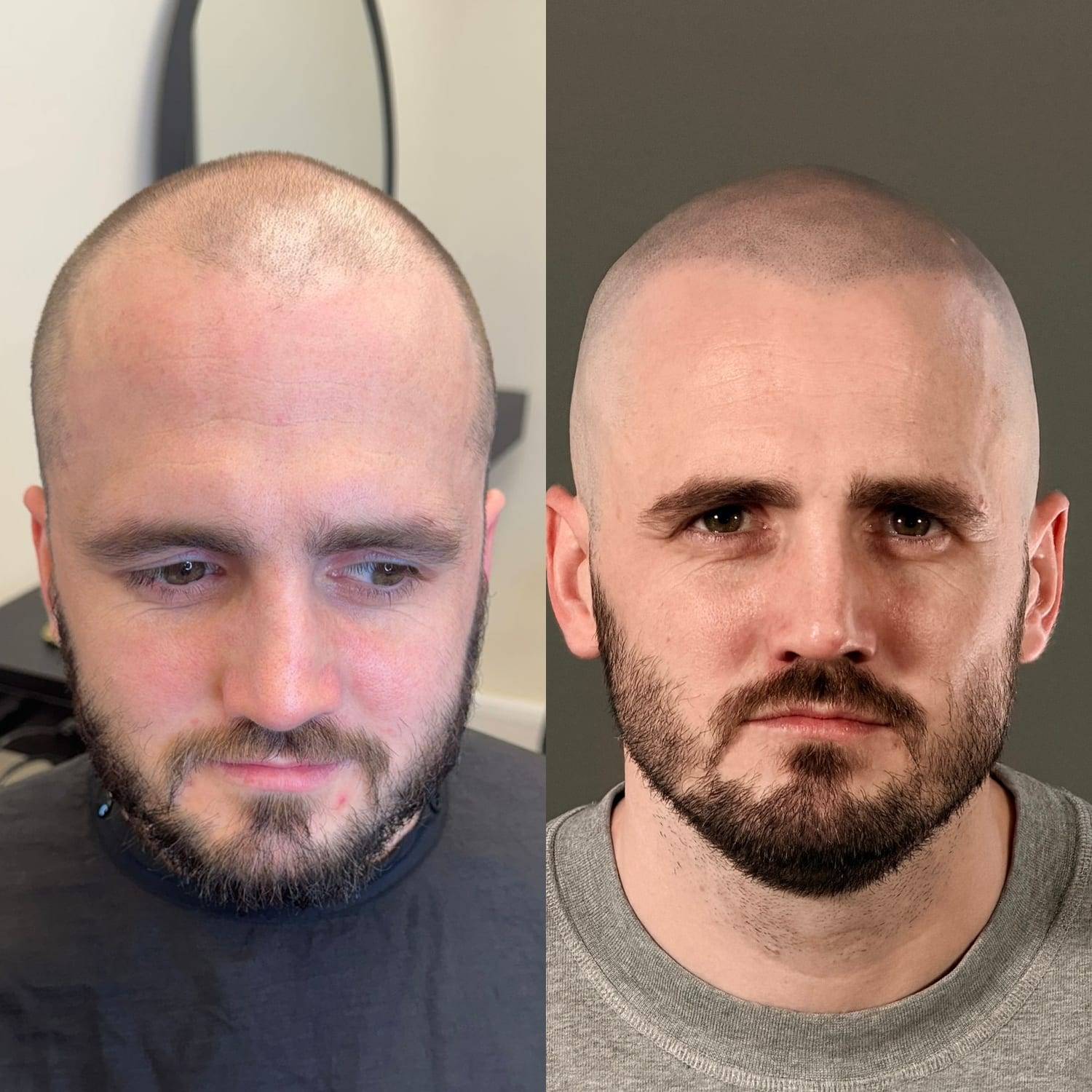
Scalp micropigmentation is a non-surgical treatment that creates the appearance of hair density or a closely-shaved hairline, while a hair transplant is a surgical procedure that relocates your own growing hair to thinning areas.
The short version
Both can help if your hair is thinning or receding, but they work in completely different ways. Scalp micropigmentation is non-surgical: it deposits tiny impressions of pigment in the scalp to recreate the look of closely-shaved hair or to reduce the contrast in thinning areas. There's no surgery and no downtime, the result is visible essentially right away, and it's refined over a couple of sessions. A hair transplant is a surgical procedure: it moves your own growing hair from one part of the scalp to another, the transplanted hair grows in over the following months, and there's a recovery period afterwards.
Put simply: SMP changes how your scalp looks; a transplant changes how much hair actually grows where you want it.
| Comparison | Scalp micropigmentation | Hair transplant |
|---|---|---|
| Procedure | Non-surgical | Surgical |
| What it does | Creates the look of density or a shaved hairline | Relocates your own growing hair |
| Downtime | None | Recovery period |
| Results visible | Right away, refined over 2-3 sessions | Months, as the hair grows |
| Maintenance | Occasional touch-up | Ongoing hair care |
| Suits | Many kinds of thinning and hair loss, plus the look of scars | Needs suitable donor hair |
| Cost | From £300-£1,000 at Kennedy | Commonly from around £4,500 for ~1,500 grafts, rising with graft count and clinic |
When is SMP the better choice?
Scalp micropigmentation tends to suit you well if you:
- like the look of a clean, closely-shaved head and want a defined hairline to match
- have thinning hair and want to reduce the contrast between hair and scalp so it looks fuller
- want a result you can see straight away, without surgery or a recovery period
- want to soften the look of scarring on the scalp, including hair-transplant scars (our full guide weighs up every option)
- prefer a one-off treatment with only occasional touch-ups, rather than ongoing upkeep
When is a hair transplant the better choice?
A hair transplant is genuinely the better choice for plenty of people, and it does something SMP simply can't - it gives you real, growing hair you can keep at length. We offer SMP rather than surgery, so we have no reason to talk you out of a transplant where it honestly fits you better. A transplant tends to suit you more if you:
- want real hair you can grow longer, comb, part and style - not the look of a closely-shaved or filled-in scalp
- have enough healthy donor hair, usually at the back and sides, for a surgeon to relocate
- are comfortable with a surgical procedure and the recovery period that comes with it
- want to add genuine, growing coverage to a specific area such as a receding front or thinning crown
- would rather invest once in your own hair than refresh a cosmetic result with the occasional touch-up
If growing, styleable hair is what you're really after, a transplant - or a transplant with SMP added later for the appearance of extra density - may serve you better than SMP alone. Suitability for surgery is something only a hair-transplant surgeon can confirm, since it depends on your donor area and your scalp. SMP and a transplant aren't rivals so much as different tools, and the right one depends on what you actually want from the result. Individual results vary with either route.
Can you have both SMP and a hair transplant?
Yes, and many people do. SMP works well alongside or after a hair transplant: it can add the appearance of density between transplanted hairs for a fuller look, and it can soften the look of any scarring left by the procedure. If you've had a transplant and aren't quite getting the coverage you hoped for, SMP is often a good complement rather than a replacement. Before you decide it has underperformed, though, it is worth reading what a hair transplant gone wrong actually looks like, because a result under twelve months old usually is not finished.
How much does each cost?
Cost is rarely the only thing that matters, but it is usually part of the decision, so it helps to compare them honestly. At Kennedy SMP Studio our scalp micropigmentation is priced from clear from-figures: a full SMP treatment starts from £1,000, density and female density work from £600, and scar camouflage from £350, with touch-ups costing less again. These are starting prices, because the final figure depends on the size of the area and the number of sessions your plan needs, which we confirm at your free consultation rather than over the phone.
A hair transplant is a surgical procedure and usually costs significantly more, priced mainly by the number of grafts moved rather than a flat fee - typically from around £4,500 for a lighter case into five figures for more extensive loss. That is a broad range rather than a quote, and the only way to know what a transplant would cost you is to be assessed by a surgical clinic. Our full guide to hair transplant cost in the UK breaks it down by graft count and technique, sourced from UK clinic data. The fairest way to think about it is value rather than headline price, since the two treatments do genuinely different things: SMP creates the appearance of density or a shaved hairline without surgery, while a transplant adds real growing hair. We will give you straight pricing for SMP and never pressure you to spend more than your result needs.
What does recovery look like?
Recovery is one of the clearest practical differences between the two. SMP is non-surgical and has essentially no physical downtime: most clients return to their normal day straight after a session. The scalp is usually a little red and may feel slightly tender for the first 24 to 48 hours, similar to mild sunburn, and the pigment can look sharper at first before it softens as the skin settles. The main job during that short window is simple aftercare, keeping the scalp dry and avoiding heavy sweating, swimming, saunas and direct sun for a few days.
A hair transplant, being surgical, involves a genuine recovery period. People typically need around seven to fourteen days before the scalp has settled enough to feel comfortable returning to normal routines, with some redness, scabbing and care of the donor and recipient areas during that time, and the transplanted hair then grows in gradually over the following months. Neither approach is right or wrong here; it simply depends on whether you want a result you can see almost immediately with little disruption, or are happy to plan for surgery and a recovery period in exchange for real growing hair. Individual experiences vary, and a surgical clinic will explain their own recovery guidance.
One straight note: Kennedy SMP Studio offers scalp micropigmentation, not hair transplants. That means we have no reason to talk you into a transplant - and if we think a transplant would genuinely serve you better, we'll say so. We give impartial guidance on which route fits your situation at a free consultation.
You can read more about how the treatment works in our guide to scalp micropigmentation, see what each treatment involves on our treatments page, or read our full breakdown of how much scalp micropigmentation costs in the UK.