
SMP Treatment
Scalp Micropigmentation for Women (Female Density)
A tailored scalp micropigmentation treatment for women, enhancing the appearance of natural density where hair is thinning or the scalp shows through.
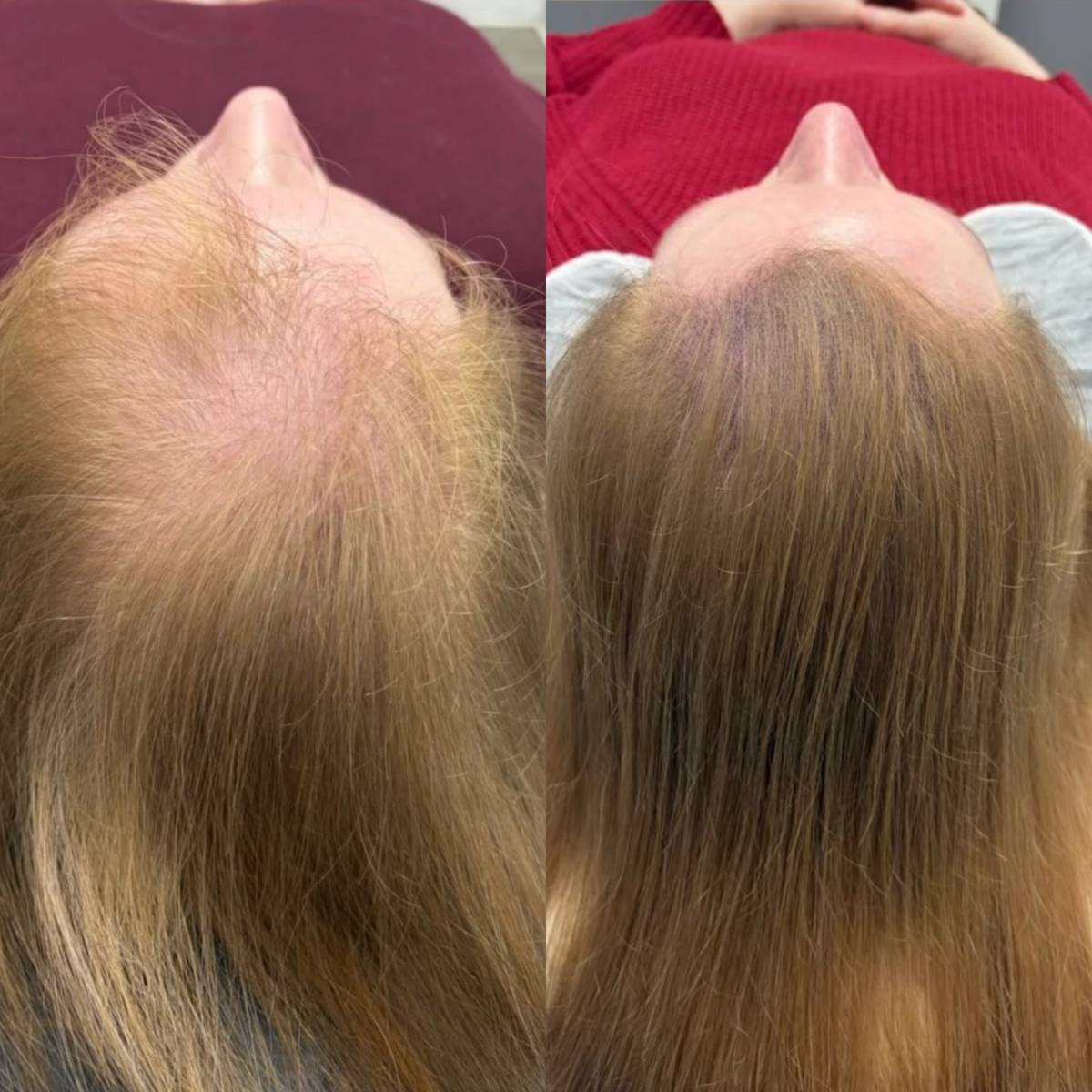
Our Female Density Treatment is scalp micropigmentation designed specifically for women experiencing thinning hair or visible scalp. It blends subtly with your own hair to restore the appearance of natural fullness.
Female Density is one form of scalp micropigmentation - see the complete guide to how it works, or read our honest guide to SMP for women.
Typically 2-3 sessions, about 4 hours per session.
Who is this treatment for?
This treatment suits women who have noticed their hair thinning - a parting that looks wider than it used to, or more scalp catching the light at the crown. If you keep your hair long and find the thinning most obvious where you part it, or in bright light and photos taken from above, this is designed with you in mind. It is cosmetic, not a hair-loss treatment, and individual results vary.
What happens during the session?
Stephen works discreetly along your parting and through the diffuse-thinning area, placing tiny pigment impressions in among the hair you already have. The aim is to settle the colour down into the scalp so it sits beneath your longer hair rather than on top of it. You can have your hair down or loosely clipped as he works section by section, checking the blend against your natural shade as he goes. Sessions run a few hours.
What results can you expect?
The look is a softer, fuller-looking parting with less bare scalp showing through, blended so it reads as your own hair rather than anything added. It reduces the contrast between hair and skin where you part and at the crown, so the difference shows up most in bright light and overhead photos. It recreates the appearance of density - it does not grow or thicken real hair. Individual results vary, and a settled finish is built over your planned sessions.
What is the aftercare?
For the first few days keep the treated area dry and avoid heavy sweating, swimming, saunas and direct sun, and try not to part your hair hard or scrub the scalp while it settles. Tie hair loosely rather than tightly over the parting. Once healed, your usual washing, styling and brushing are fine. Light moisturising and SPF on any exposed parting help keep the colour looking its best. Full written aftercare is given at your appointment.
Common questions
Does it work with long or coloured hair?
Yes. The pigment is placed on the scalp between your hairs, so the length of your hair does not change whether or how well it works, whether you wear it short, long or somewhere in between. Stephen matches the shade to your roots and natural tone at the time of treatment, and the impressions sit underneath longer hair where the scalp would otherwise show, so the blend holds even as your hair moves and falls naturally. If you colour your hair, it is best to do so before your session rather than after, so the match is made to the colour you actually wear day to day, not a shade that changes again shortly afterwards.
Will it be visible at my parting?
The intention is the opposite: to make the parting look fuller and the scalp less visible, not to add anything you can spot as a treatment. The work is kept subtle and blended in among your own hair, section by section, so what you notice afterwards is reduced contrast where skin used to show through, rather than obvious dots or an artificial pattern. It is a cosmetic effect that recreates the look of density, not real hair growth, and how it reads up close varies from person to person depending on hair colour, thickness and how the parting is worn. Most people find it settles in convincingly within normal daily light, and Stephen will always be honest at your consultation about what to expect for your own hair.
Can I still dye and heat-style my hair afterwards?
Once the treated area has fully healed you can colour, straighten, curl and style as you normally would, because the pigment sits in the scalp itself rather than in the hair, so heat styling and most products do not affect it at all. During the first few days while it settles, avoid colouring the treated area and keep harsh products and hot tools off the scalp itself, since heat and chemicals can irritate skin that is still healing. After that short window, your usual routine is fine to resume in full. Your written aftercare, given at your appointment, confirms the exact timings for your treatment so you know when it is safe to go back to your normal styling.
Does scalp micropigmentation hurt?
Most clients describe SMP as mild discomfort rather than pain, comparable to a light scratching sensation. Everyone feels it slightly differently, and how sensitive you are can vary across the scalp, with the hairline and areas over bone often a little more noticeable than the softer areas further back. Numbing options are discussed at your consultation, so you can decide what suits you before we begin. Sessions typically last a few hours, with short breaks whenever you need them, and the work is built up gradually rather than rushed. Any redness usually settles within 24 to 48 hours, and most people are comfortable returning to normal activities the same day. If you have a low pain threshold or any concerns at all, raise them at the consultation and we will plan around you. Individual experiences vary, and we will never pretend a treatment is completely sensation-free.