

From the studio
Balding Crown: Why It Happens and What Actually Helps
Spotted a bald spot or a balding crown in a photo taken from above? It is almost always pattern hair loss. Here is what causes it, whether it grows back, and the honest options if you want the look of density back.
Real client transformations
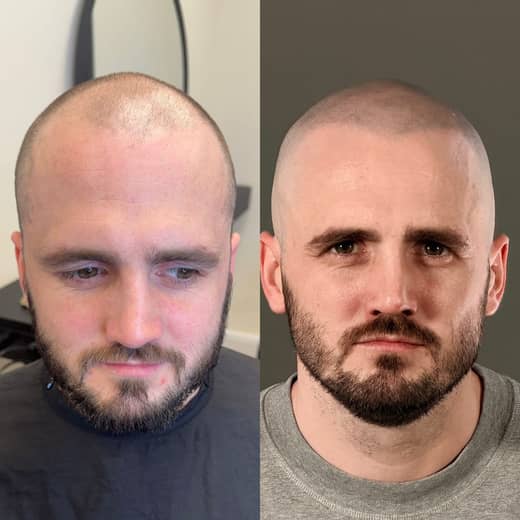
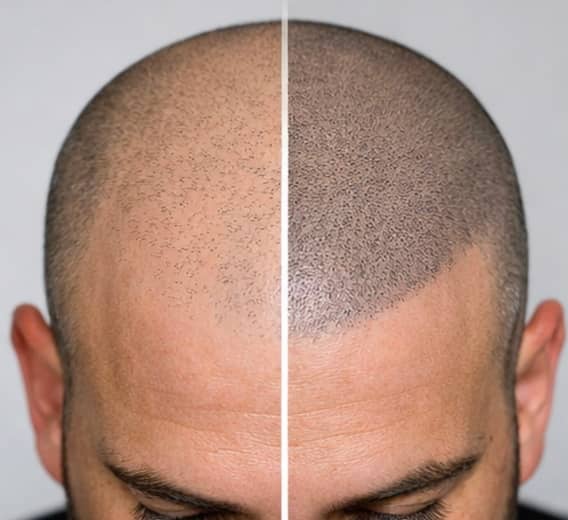
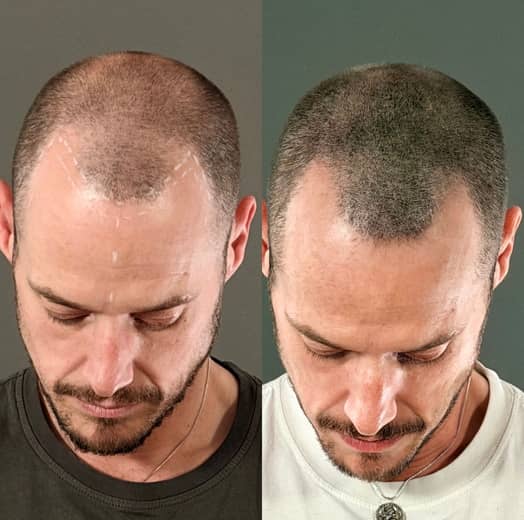
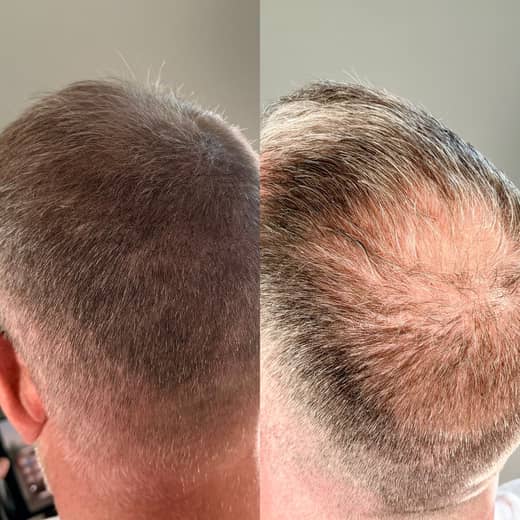
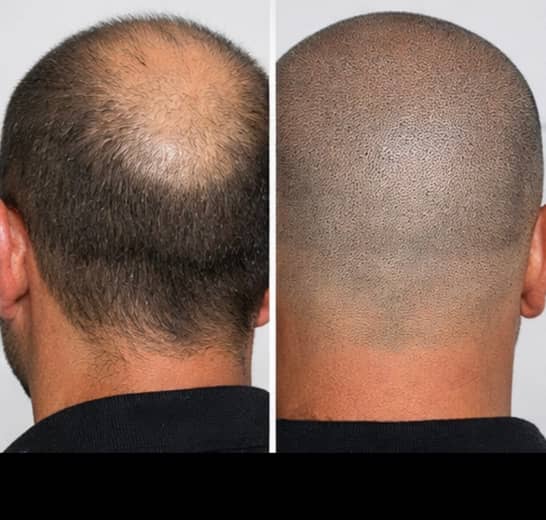
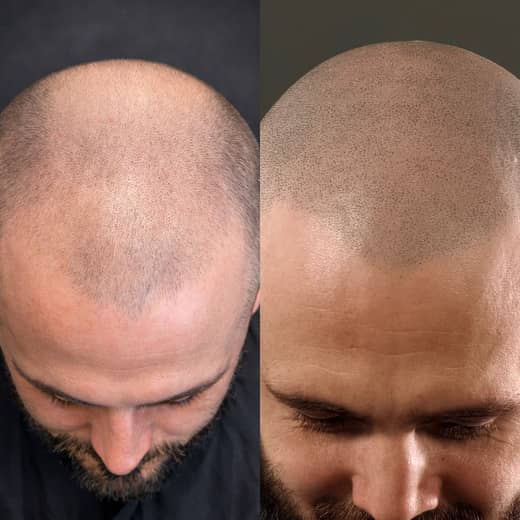
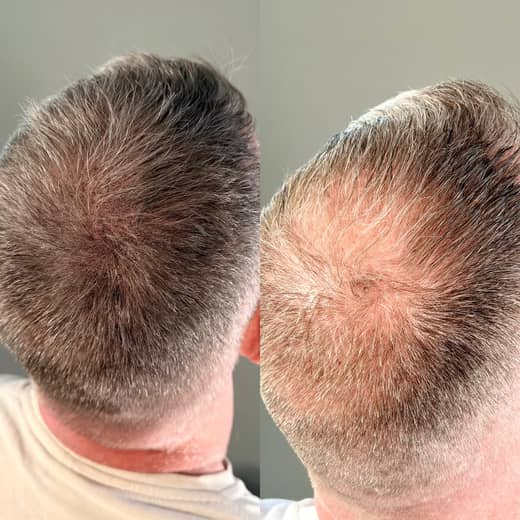
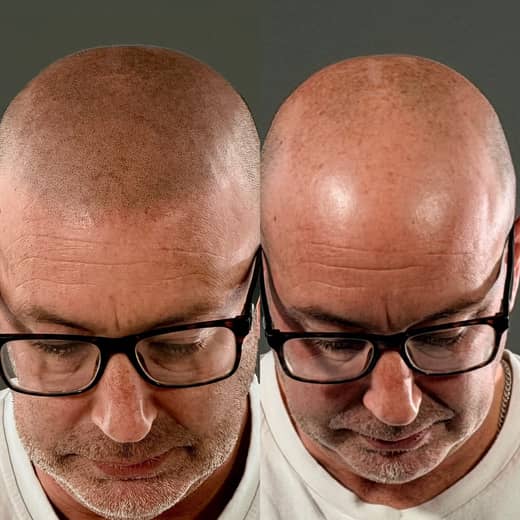
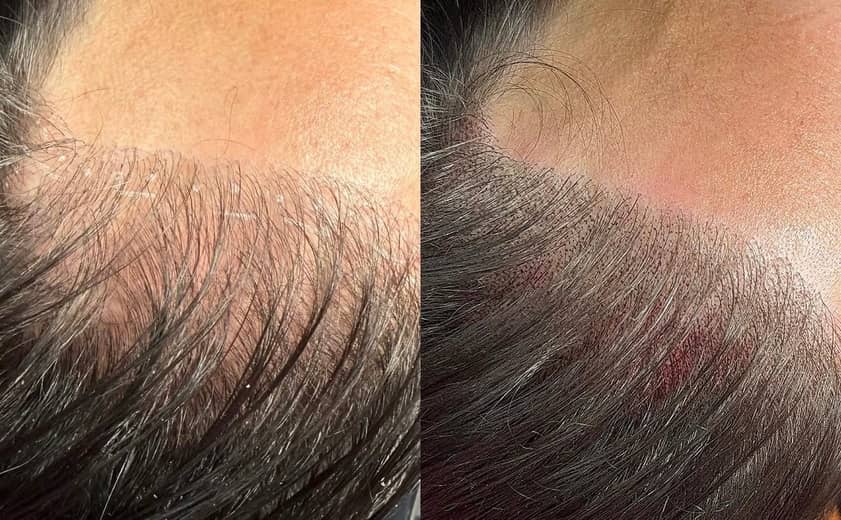
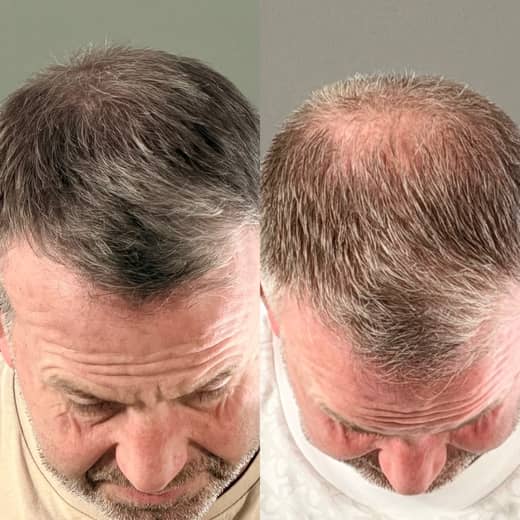
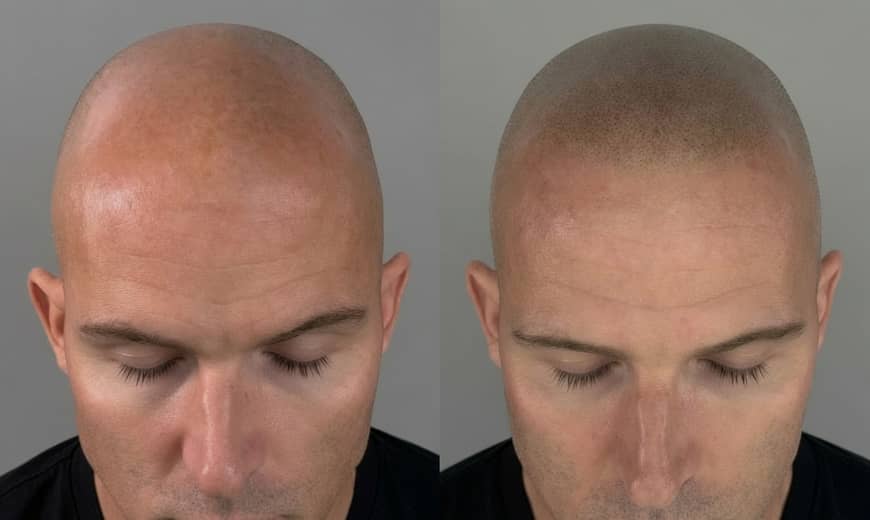
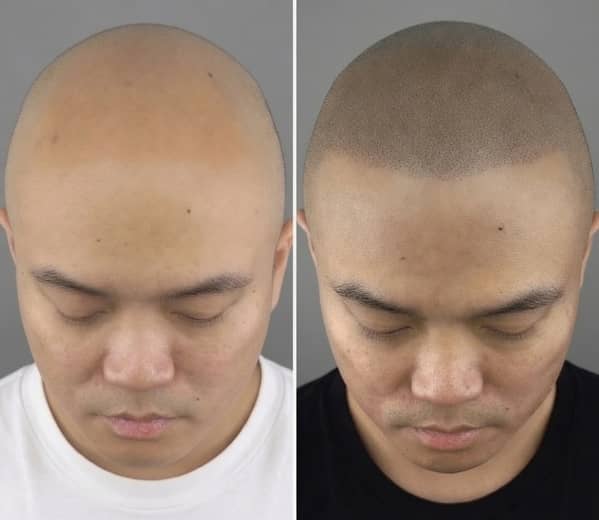
Most people do not catch a balding crown in the mirror. They catch it in a photo taken from above, a comment from the barber, or the way a harsh overhead light suddenly finds more scalp than it used to. Whether you call it a bald spot on the crown, crown thinning or just the top going, it is the same thing happening. It is an unsettling moment, and the honest question underneath it is a practical one: why is it happening, and what actually helps? Here is a straight answer, including the options the hair-loss clinics tend to skip over.
The short answer
A balding crown, also called crown thinning or a bald spot on the crown, is almost always male or female pattern hair loss: genetic, driven by the hormone DHT, and slowly progressive. Medication like minoxidil or finasteride can slow it and partly thicken early thinning, but only while you keep using it; a hair transplant can restore density surgically. Scalp micropigmentation takes a different route, it does not grow hair, but it recreates the appearance of a fuller crown. Which one suits you comes down to whether you want regrowth or simply want the look of density back.
What a balding crown actually is
The crown, or vertex, is the highest point of the scalp, roughly where a small cap would sit. When it thins, the gap between the hairs there widens so the scalp shows through, forming a circular or oval area that slowly opens up over the years. Because it sits at the top and back of the head, it is genuinely hard to see yourself, which is why it so often gets noticed in photos from above rather than day to day. People describe it differently depending on how far along it is: early on it reads as crown thinning, and once the scalp shows clearly it gets called a bald spot on the crown or a balding crown. Same process, different stage. The crown is also a common place for male pattern loss to show first, so spotting it early is useful rather than alarming. Crown involvement is one of the markers used to place you on the Norwood scale, the standard grading of male pattern loss.
Is it normal for crown hair to look thinner?
Some of it is, and this catches a lot of people out. Everyone has a whorl at the crown, the spiral point the hair grows out from, and hair radiating outwards from a single point will always look sparser there than hair lying in one direction. On a full head of hair that whorl can already show a coin of scalp under bright light from above, and it has done your whole life. That is anatomy, not loss.
The difference worth watching is whether it is changing. A natural whorl looks the same in a photo from last year; genuine thinning widens, the hairs inside it get finer and shorter, and the area of visible scalp grows season by season. If you are unsure which you are looking at, the honest test is time and the same lighting, not a single alarming photo. Take one now, take another in six months, and compare them properly.
Is it normal to have a thinning crown but no receding hairline?
Yes, and it is a recognised pattern rather than anything unusual. Male pattern loss does not always start at the front. Plenty of men keep a hairline that has barely moved while the crown opens up behind them, which is why the Norwood scale has a separate vertex variant for exactly this shape. Just as often it runs the other way, with the temples going first and the crown holding for years.
What it does not usually mean is that you are safe at the front. The same genetic sensitivity to DHT is present across both areas, so a hairline that has not moved yet may still move later, on its own timetable. That is worth knowing before you plan anything, because a treatment that suits a crown alone is not always the right plan if the front follows. Our guide to telling a mature hairline from a receding one is the honest way to check whether your front has actually moved or just always sat where it does.
Why it happens, honestly
For the great majority of people, crown thinning is androgenetic alopecia, better known as male or female pattern hair loss. The NHS is clear that this type “is permanent” and “usually runs in the family”. It is driven by genetics and a hormone called DHT, which makes sensitive follicles at the crown and hairline gradually miniaturise, producing finer, shorter hairs each cycle until some stop growing visible hair at all.
It is more common than most people assume. MedlinePlus Genetics notes it affects an estimated 50 million men and 30 million women in the United States alone, that “more than 50 percent of men over age 50 have some degree of hair loss”, and that it can start as early as the teens. Men tend to recede at the temples and thin at the crown; women more often thin across the top with a widening parting, and the hairline usually stays put, which our honest guide to scalp micropigmentation for women covers in full. If the front is the part you are unsure about, our guide to telling a mature hairline from a receding one covers how to check it properly, since a hairline moving at the same time as the crown is the classic pattern.
A smaller number of cases are down to something else: stress, thyroid problems, low iron or a scalp condition. Those tend to come on faster or more patchily, so if that sounds like you, it is worth seeing a GP to rule them out before assuming it is pattern loss. If the extra shedding only started this autumn and is spread evenly rather than concentrated at the crown, it may just be normal seasonal hair shedding rather than the start of pattern loss.
What it is almost never down to is a habit you can stop. Wearing a cap is the usual suspect, and the evidence does not support it, as our look at whether hats cause hair loss sets out.

What we would say at a consultation
Before weighing any treatment, get clear on one thing: do you want to keep and regrow your own hair, or do you simply want the crown to look less thin? That single question sorts the options faster than anything else. If regrowth is the goal, the medical routes below come first. If it is the look you care about, scalp micropigmentation may get you there with no drugs and no surgery.
Can a thinning crown grow back?
Partly, and only if you catch it early. Where follicles are miniaturised rather than gone, the two main medical treatments can thicken what is there and slow further loss. The NHS names them plainly: “Finasteride and minoxidil are the main treatments for male pattern baldness”, while noting they “are not available on the NHS” so you would pay privately.
- Minoxidil is a topical foam or liquid, and the crown is actually where it has the strongest evidence. The catch is that it is not a cure: it works only while you keep applying it, and the benefit reverses if you stop.
- Finasteride is a daily tablet that lowers DHT. It is prescription-only and can have side effects, and it is often combined with minoxidil for the best chance of holding the line.
- A hair transplant is the surgical route for an established bald spot, but the crown is one of the hardest areas to transplant well because the hair grows in a spiral whorl and needs a lot of grafts to avoid looking sparse. UK clinics commonly quote around £4,500 to £6,500 for the crown alone (Harley Street HTC, Wimpole Clinic, 2023 to 2026), which is one reason people weigh it against the alternatives. Our guide to SMP versus a hair transplant lays the two side by side.
The honest limit is this: once an area is fully bald, the follicles are unlikely to come back on their own, and no cream will change that. That is the point where a lot of people start asking a different question.
The option the clinics rarely mention: density SMP
If you would rather not commit to daily medication or surgery, there is a third route that most hair-loss pages skip because they do not offer it. Scalp micropigmentation recreates the appearance of a fuller crown by placing thousands of tiny pigment impressions between the hairs you still have, so the scalp shows through less and the contrast between hair and skin softens. The NHS lists it among cosmetic options for hair loss, describing it simply as a “tattoo used to look like short hair”. You can see how the technique works on our scalp micropigmentation page; it is the same thing some people call a hair tattoo.
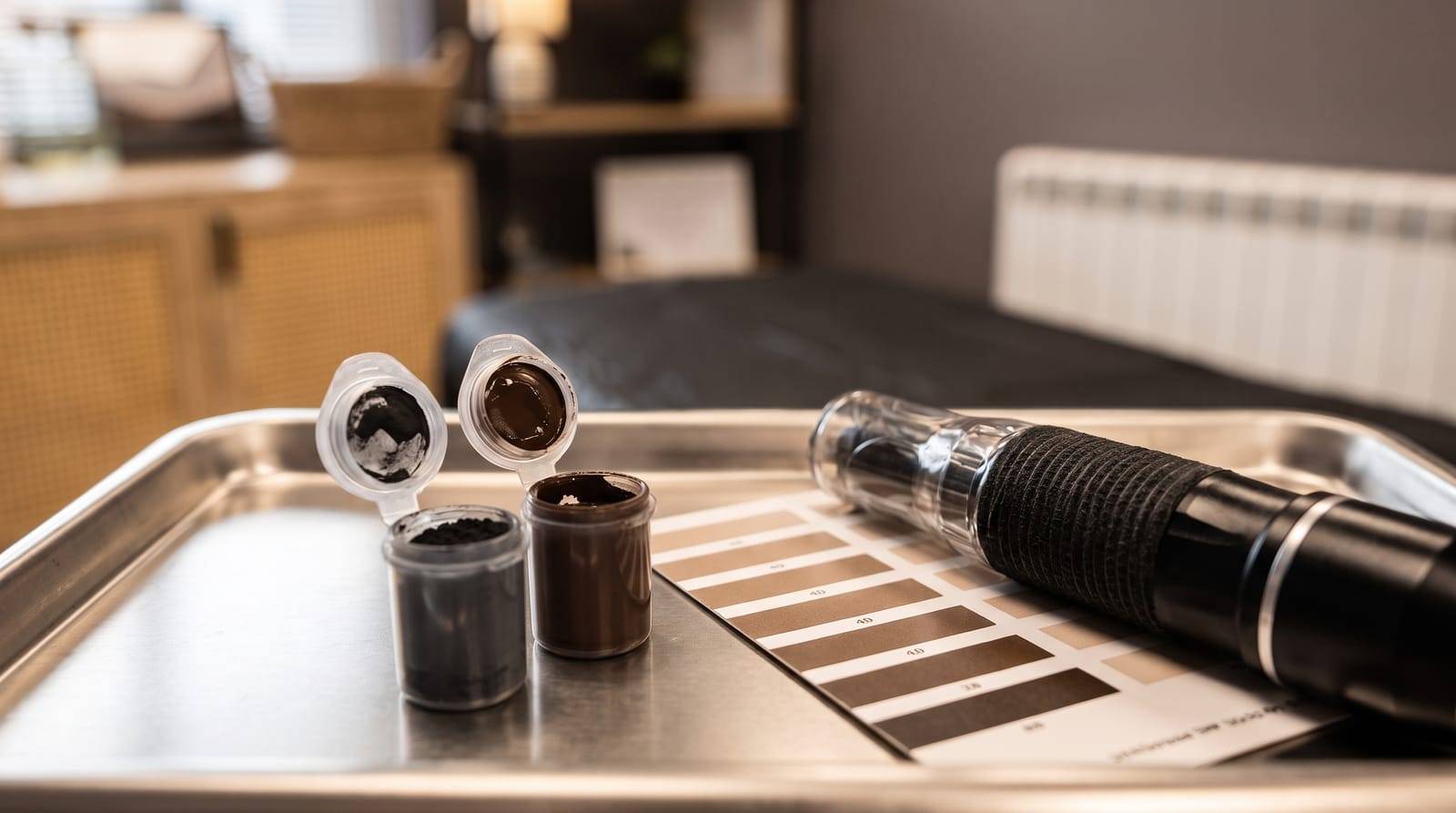
Two honest points matter. First, density SMP does not grow hair and does not stop the underlying loss; it changes how the crown looks, not what is happening beneath the skin, and individual results vary. Second, it works best where there is still some hair to blend among, as a thinning crown usually has. On a completely bald crown it recreates the look of a closely-shaved head instead, which suits some people and not others. That distinction is exactly what a consultation is for, and it is worth knowing what one density session can realistically achieve. For women, whose crown thinning tends to be more diffuse, we plan it as a female density treatment.
Crown thinning at a glance
- The cause: almost always genetic pattern hair loss, driven by DHT, and slowly progressive.
- To regrow it: minoxidil or finasteride can thicken early thinning, but only while you keep using them.
- To restore it surgically: a transplant works, but the crown is a harder area to do well and commonly runs £4,500 to £6,500.
- To simply look less thin: density SMP from £600 recreates the appearance of a fuller crown, with no drugs or surgery.
Before any of that, a good haircut is worth trying first, and it costs nothing beyond your normal barber visit. Our guide to hairstyles for thinning hair covers which short, textured cuts genuinely reduce how much a thinning crown shows, and the honest point where a haircut alone stops being enough.
It is also fair to say SMP is not entirely maintenance-free. The pigment softens over several years and most people choose an occasional touch-up to keep the crown looking its best, so it is long-lasting rather than truly permanent. Against a course of surgery or a lifetime of daily tablets, many people find that a reasonable trade.
What should I do if my crown is thinning?
Start by deciding what you actually want, because that narrows six options down to two. If you want to keep and regrow your own hair, the medical routes come first and work best started early. If you want the thinning to stop showing, the cosmetic routes get you there without drugs or surgery. Here is the honest set, including the ones nobody selling a single treatment tends to list together.
| Route | What it actually does | The honest limit |
|---|---|---|
| Minoxidil (topical) | Thickens miniaturised hair; the crown is where it has the strongest evidence | Works only while you keep applying it, and reverses if you stop |
| Finasteride (daily tablet) | Lowers DHT to slow the loss, often combined with minoxidil | Prescription-only, can have side effects, not available on the NHS |
| Hair transplant | Moves your own growing hair into the area | The crown is one of the hardest areas to do well; commonly £4,500 to £6,500 for the crown alone |
| Hair fibres or concealers | Keratin powder clings to existing hair so the scalp shows less, instantly | Washes out every time, so it is an ongoing cost and a daily job |
| A shorter, textured haircut | Reduces the contrast between hair and scalp; costs nothing extra | Buys time rather than solving it, and stops being enough eventually |
| Density scalp micropigmentation | Places pigment between the hairs you still have so the crown reads fuller, from £600 | Does not grow hair or stop the loss, and needs an occasional touch-up |
Nothing on that list stops pattern hair loss, because nothing can. What differs is whether you are treating the hair or treating the look, and how much you want to keep doing about it. If you want a straight opinion on which line of that table fits your crown, that is what a free consultation is for.
The real question is not which treatment is best, it is whether you want your own hair back or simply want the thinning to stop showing.
The bottom line
Crown thinning is common, it is usually pattern hair loss, and it is manageable rather than reversible. If keeping and regrowing your own hair matters most, start early with the medical options and expect to stay on them. If you are covering a thinning crown with a shake-on powder for now, our honest look at hair fibres versus SMP explains when the powder is the smart buy and when it stops being worth the daily effort. If you would rather the crown simply looked fuller without drugs or surgery, scalp micropigmentation is a genuine third option that the regrowth-focused clinics rarely put on the table. The surest way to know which route fits your crown, and your expectations, is a proper look in person. A free consultation is the fastest way to a straight answer, and you can see what SMP costs in the UK on our transparent price list before you come in.
More from the blog

Autumn Hair Shedding in Men (2026): Normal or Something Else?
More hair in the brush this autumn than usual? For most men that is a normal, temporary seasonal shed, not the start of balding. Here is the honest test to tell the two apart, and what to do either way.

Do Hats Cause Hair Loss? What Actually Thins a Hairline
The hat myth has outlived the evidence. In a study of 92 identical twins, the daily hat wearers had less temple recession than their brothers, not more. So if it is not the cap, what is actually going on up there?

The Norwood Scale: The 7 Stages of Male Hair Loss (and What Helps)
Noticed your hairline receding or your crown thinning? The Norwood scale grades that pattern from stage 1 to 7. Here is how to find your stage, why it happens, and the honest options at each one.
Common questions
What does a balding crown mean?
In most cases it means male or female pattern hair loss has reached the crown, the vertex at the top and back of the head. It is genetic, driven by a hormone called DHT that gradually shrinks the follicles there so they make finer, shorter hairs until the scalp starts to show through. Stress, thyroid problems and low iron can thin hair too, so if the change is sudden or patchy it is worth seeing a GP to rule those out, but steady thinning at the crown is usually pattern loss.
What age does the crown start thinning?
There is no set age. Pattern hair loss can start as early as the late teens or twenties and the risk rises with age; more than half of men have some degree of hair loss by their fifties. In women it most often becomes noticeable around and after menopause. The crown is a common place for it to show first in men, which is why so many people spot it in a photo taken from above long before they would in the mirror.
How long before you know if minoxidil is working on your crown?
Give it a good six months before you judge it, and do not panic at the two-month mark. Minoxidil often causes a burst of shedding in the first few weeks as follicles are pushed into a new growth cycle, which feels like the opposite of progress but is usually a sign it is doing something. Visible thickening at the crown typically takes three to six months, and the fullest effect closer to a year. Photograph the same spot in the same light every month rather than relying on how it looks in the mirror, because gradual change is almost impossible to judge day to day. If a year of consistent daily use has changed nothing, it is reasonable to conclude it is not working for you and to look at the other routes.
Is crown thinning reversible?
Pattern crown thinning is not permanently reversible because the underlying cause is genetic and ongoing, but it is manageable. Medication can hold the line and partly regrow early thinning for as long as you take it; a transplant can move hair into the area surgically. If you would rather not commit to daily treatment or surgery, scalp micropigmentation reduces how much scalp shows through the crown by adding pigment among the hairs you still have. None of these stops the loss itself, so honest expectations matter.
How do you fix a thinning crown?
There is no single fix; there are routes, and the right one depends on what you actually want. If you want to keep and thicken your own hair, minoxidil and finasteride are the main medical treatments and work best when started early. If you want density restored surgically, a hair transplant is an option, though the crown is one of the harder areas to transplant well. If you want the thinning to simply look less obvious without drugs or surgery, density scalp micropigmentation recreates the appearance of a fuller crown. A consultation is the honest way to match the route to your situation.
Does scalp micropigmentation work on a thinning crown?
Yes, and the crown is one of the areas it suits most, as long as expectations are right. Density SMP places tiny pigment impressions between the hairs you still have so the scalp shows through less and the crown reads as fuller. It works best where there is still some hair to blend among; on a fully bald crown it recreates the look of a closely-shaved head rather than hair. It does not grow hair or stop the loss, and individual results vary, so we would always look at your crown in person first.
Thinking about scalp micropigmentation?
Book a free, no-obligation consultation. We'll talk through your hair openly - no guarantees and no medical claims, just a clear idea of whether SMP is right for you.
Book a free consultation