
From the studio
Scalp Micropigmentation Regrets: Why They Happen and How to Avoid Them
Worried you might regret SMP? Most regret traces to the practitioner, the expectations or rushing the decision, and all three are avoidable. A frank look at what goes wrong, and how to be sure it does not happen to you.
Real client transformations
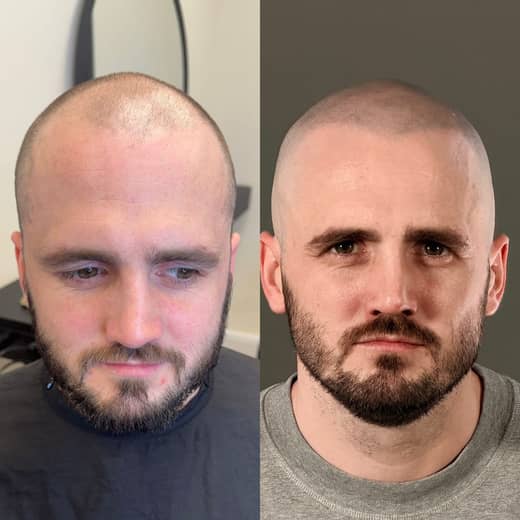
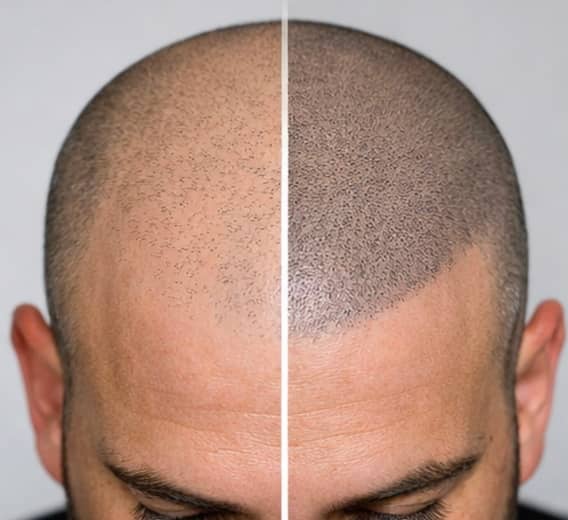
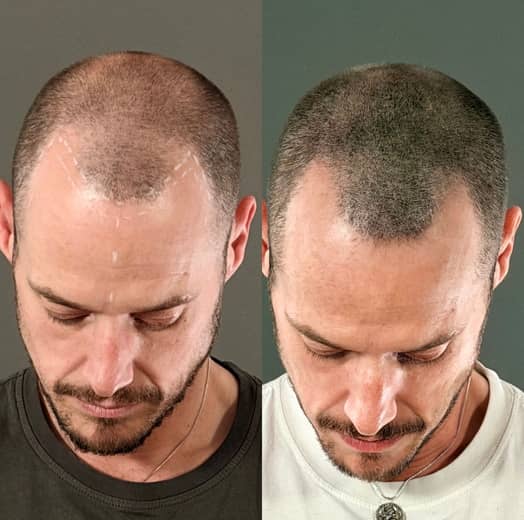
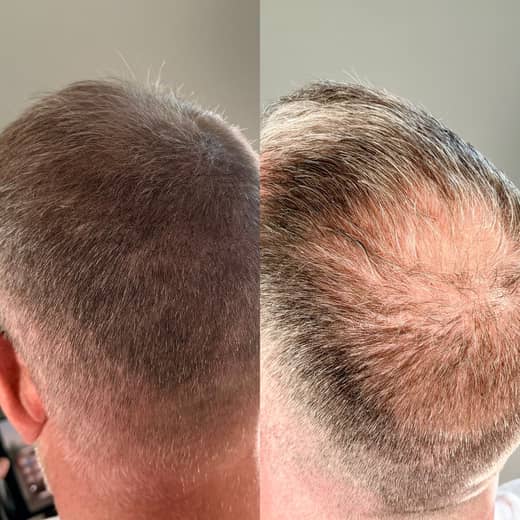
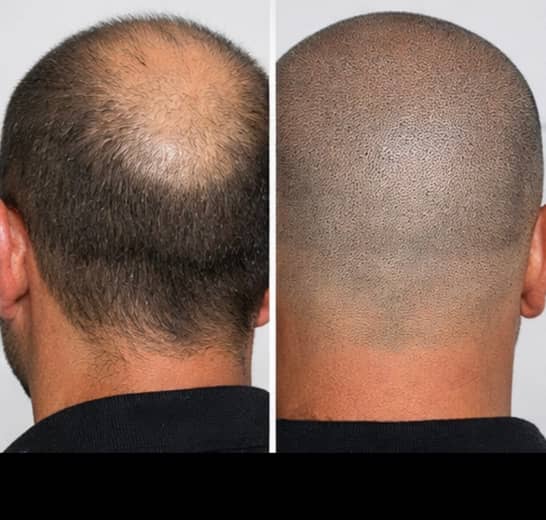
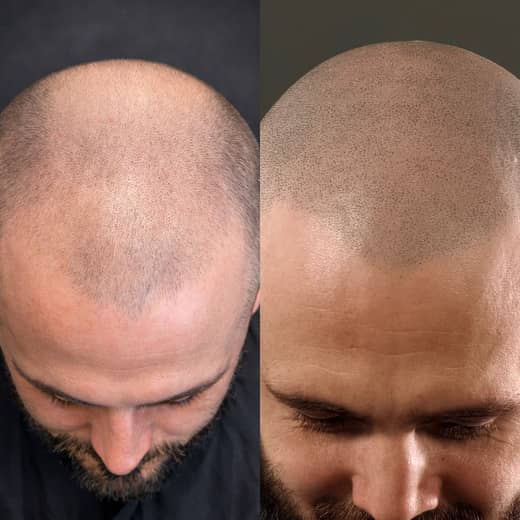
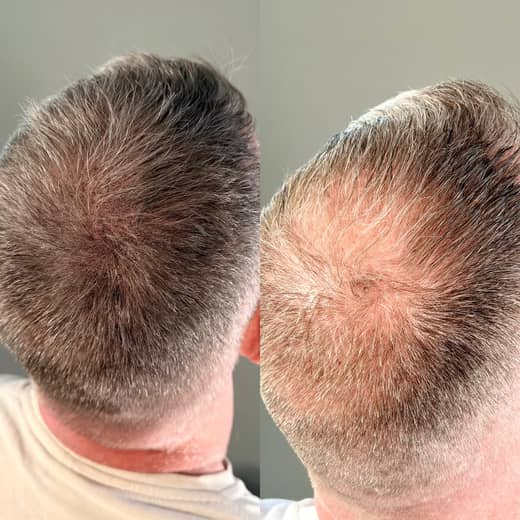
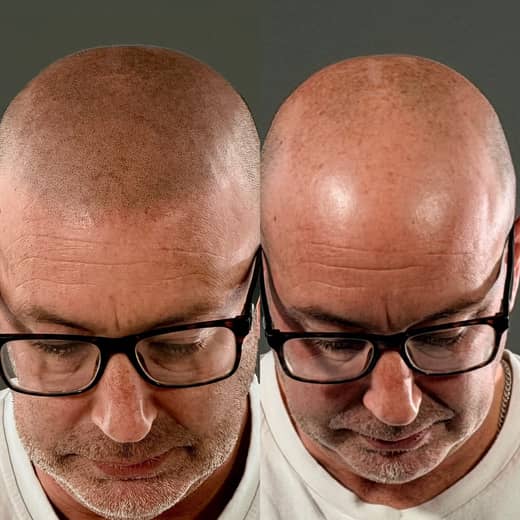
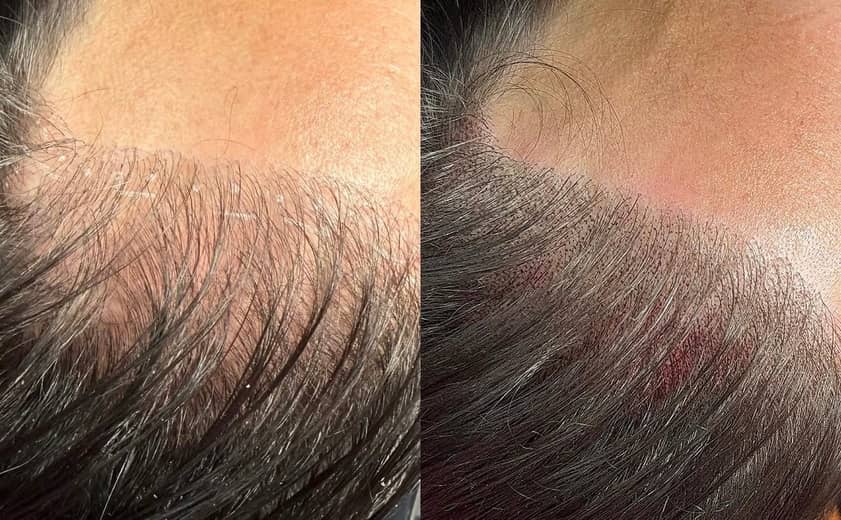
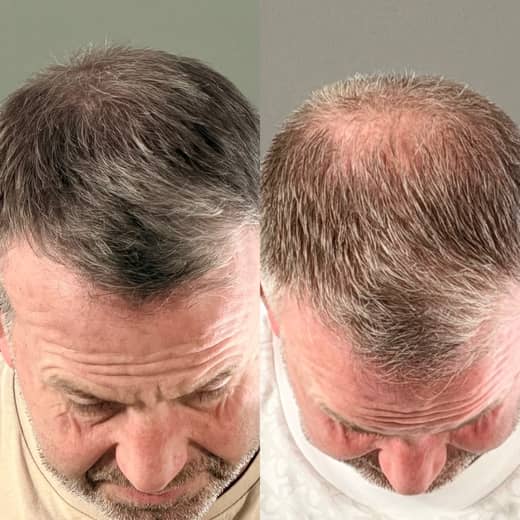
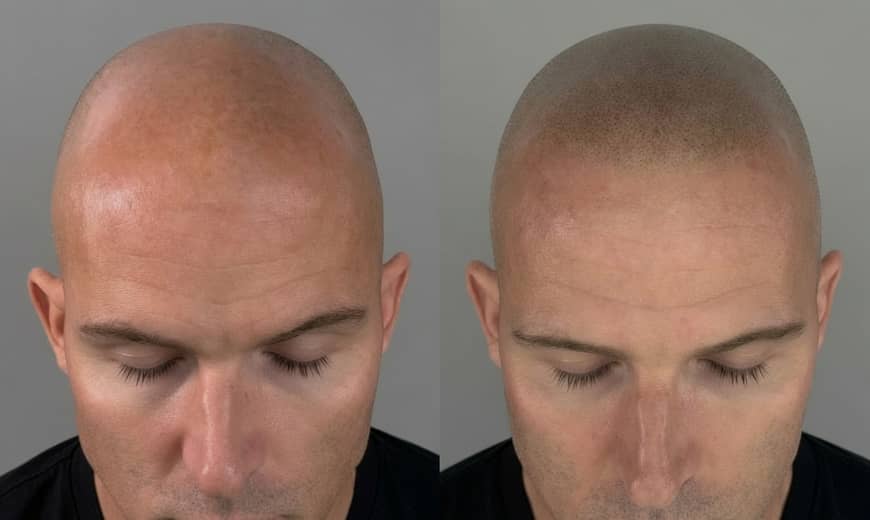
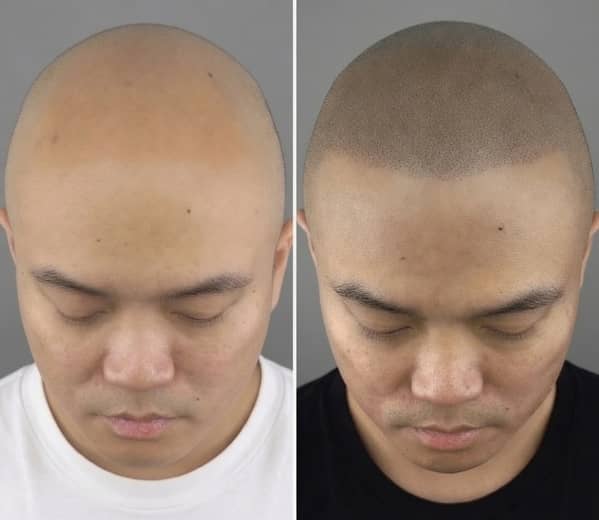
Search “scalp micropigmentation regrets” and you will find plenty to worry about: harsh hairlines, ink that turned blue, work that healed patchy. It is a fair thing to research before committing to something that lasts years. The reassuring part is that almost all of it is avoidable, and the causes are well understood.
The short answer
Most scalp micropigmentation regret traces back to one of three avoidable things: the wrong practitioner, unrealistic expectations, or rushing the decision. Choose an experienced practitioner on the quality of their healed work, go in wanting a cosmetic change rather than regrowth, and take the time to plan the design properly, and you remove the overwhelming majority of the risk.
This is not a post that pretends nobody is ever unhappy. Some people are, and it helps to understand why, so you can make sure you are not one of them. As a practitioner I would far rather you read this and ask hard questions than book on a whim and hope for the best.
Do people actually regret scalp micropigmentation?
The honest answer is that most people who research it properly and choose the right practitioner are pleased they did it, and a smaller number are not. The unhappy stories are loud online because a bad result is genuinely distressing, but they are not the average outcome. What they nearly all have in common is a cause that could have been headed off before the first needle touched the skin.
Before we get to how to avoid it, it is worth being clear on the one thing that underpins realistic expectations. SMP places pigment in the scalp to recreate the appearance of closely shaved follicles or denser looking hair. It does not grow hair, regrow hair, or treat the cause of hair loss. If regrowth is what you are hoping for, SMP is the wrong treatment, and going in expecting it is a fast route to disappointment. Our guide to how scalp micropigmentation works covers exactly what it can and cannot do.
Why people regret scalp micropigmentation
Regret is rarely random. When you read enough accounts, the same handful of causes come up again and again.
The real causes of SMP regret
- An inexperienced practitioner. Choosing on price rather than the quality of healed work is the single biggest cause of bad SMP.
- An unnatural hairline. A hairline placed too low, too straight or too harsh for the face looks painted on rather than grown.
- The wrong colour or depth. Pigment placed too deep or the wrong ink can, over time, shift towards a blue or grey cast.
- Unrealistic expectations. Expecting styleable hair, or a result that is invisible under a magnifying glass, sets you up to be let down.
- Rushing the decision. Booking quickly, without a proper consultation or seeing genuine results, leaves too much to chance.
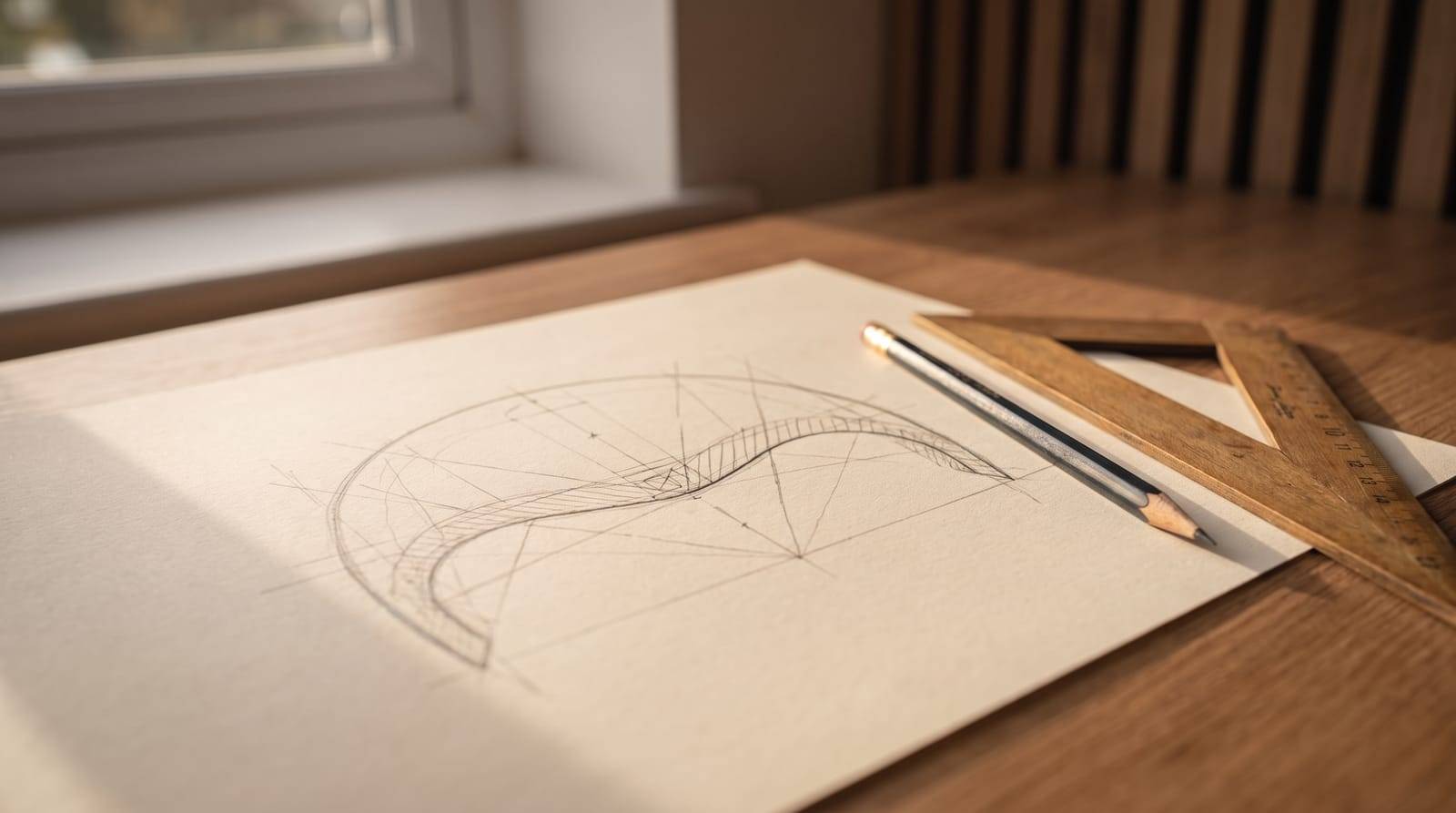
The thread running through all of these is that they are decisions made before the treatment, not accidents during it. An experienced practitioner is not just steadier with the needle. They match the shade to your hair and skin, they design a hairline that suits your face and age, they place pigment at the right depth so it holds its colour, and, crucially, they will tell you honestly if your expectations are off. Every one of those judgements is a chance to prevent a regret, and it is why who you choose matters more than almost anything else.
Is scalp micropigmentation permanent, or can regret be undone?
One quiet worry behind a lot of hesitation is the sense that SMP is a single irreversible decision. It is gentler than that. SMP is long-lasting but not strictly permanent: the pigment softens gradually over several years rather than staying fixed forever. That means the look can be adjusted and refreshed as you age, and it takes some of the pressure out of choosing. If you want the fuller, honest breakdown of why it fades and what actually speeds that up, we cover it in depth in how long scalp micropigmentation actually lasts.
If someone is unhappy with existing work, minor issues can often be softened or corrected by an experienced practitioner through careful blending and shade adjustment. In the rarer cases where pigment needs to come out completely, laser removal can lighten or clear it, though that is a separate process with its own cost and sessions. It is a genuine safety net, but the sensible aim is never to need it, which comes back to getting the first treatment right.
The best way to fix a bad SMP result is to avoid it in the first place, and that decision is made at the consultation, not the appointment.
What does scalp micropigmentation look like after 5 years?
People considering SMP often want to know how it ages, and it is a fair question for something you will live with. Done well, five year old SMP still reads as a natural shadow of closely shaved hair or added density, just a little softer than on day one. As skin renews and sun exposure does its work, the pigment lightens gradually. That gentle fade is not a flaw. It means the look can be kept in step with your natural hair and refreshed when you want to.
This is why many people choose an occasional touch-up to keep density looking its best, from £300, rather than treating the first sessions as the end of the story. Simple aftercare, mainly protecting the scalp from strong sun once healed, helps the result hold for longer. How quickly it softens depends on your skin, your sun exposure and your own body, so results vary from person to person.
Does scalp micropigmentation look fake?
This is probably the most common fear, and it is an honest one, because poor SMP absolutely can look fake. A flat, too dark, blocky shadow, or a hairline with no natural variation, is what gives the treatment its “obvious” reputation. But that is a description of bad work, not of the treatment itself.
When the shade, the placement and the density are matched carefully to your own hair and skin, it reads as your own short hair at normal viewing distances, not a stamp of ink. The way to judge this for yourself is not to read promises, it is to look at genuine healed results, and it helps to know how to read an SMP before-and-after honestly so you are comparing settled work in fair conditions rather than flattering day-one photos. That is the honest test, and it is one we are happy for you to apply to our own work.
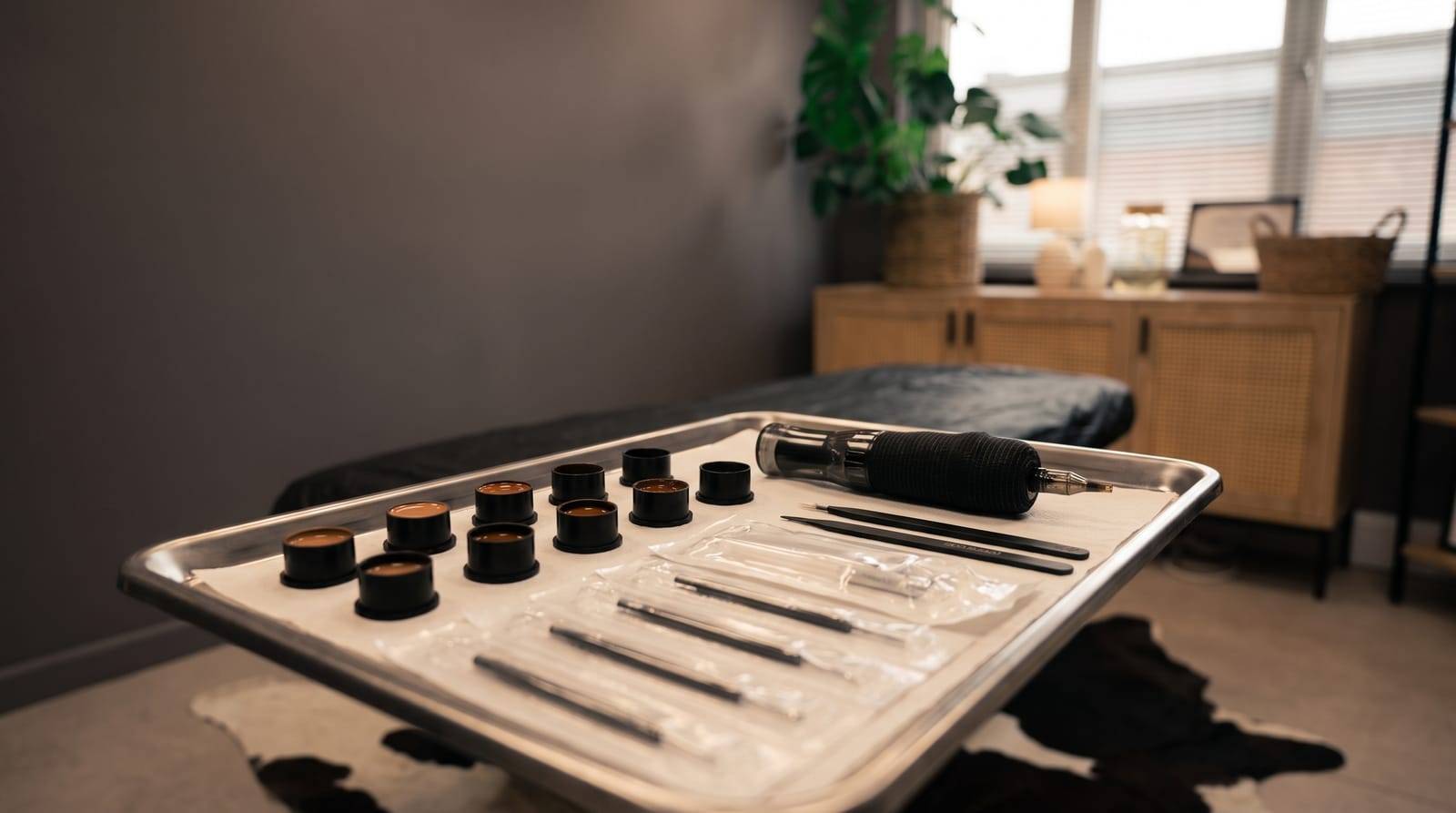
Getting that natural finish comes down to the unglamorous details: the right pigment shades mixed for your hair, clean single-use needles, and the depth judged so the colour holds true rather than shifting over the years. It is precisely this care that separates work people are glad they had from the work that ends up on a regret forum.
How a proper consultation prevents regret
If you have read this far, you will have spotted the pattern: nearly every SMP regret is decided before any pigment goes in. That is exactly what a consultation is for. It is where we look closely at your scalp and skin, talk honestly about whether SMP suits your goal or whether it does not, agree a hairline design that fits your face and age, and match a shade to your own hair. It is also where we would tell you if you are hoping for something SMP cannot give, because that conversation is far better had before you commit than regretted after.
If you are still weighing up whether it is for you at all, our guide to whether scalp micropigmentation is right for you works through suitability in more detail, and what to expect at the studio walks through how a treatment actually runs. If the regret you are carrying is about surgery rather than pigment, what to do when a hair transplant has gone wrong covers that situation and the options that follow it. You can also read more about Stephen’s approach and see our transparent prices, which start from £1,000 for a full SMP treatment and set out honestly what scalp micropigmentation costs in the UK, and why the cheapest quote is rarely the best value.
The bottom line
SMP regret is real, but it is rarely bad luck. It comes from the wrong practitioner, the wrong expectations, or too little planning, and all three are within your control. Choose someone on the quality of their healed work, be honest with yourself about wanting a cosmetic change rather than regrowth, and give the design and the decision the time they deserve. Do that, and you remove almost everything that people end up regretting. The rest is a conversation, and the first one is free.
More from the blog
Hair Transplant Gone Wrong: How to Tell, and What You Can Actually Do
If you are a few months post-op and panicking, the most useful thing anyone can tell you is that you cannot judge it yet. Here is how to tell real failure from a normal timeline, and what to do if it has gone wrong.
Does PRP Work for Hair Loss? The Honest UK Evidence
PRP for hair loss has real clinical evidence, but it is more mixed and limited than clinic pages selling it let on. Who it actually helps, who it does not, real UK costs, and where SMP fits when PRP cannot.

What a Hair System Really Costs in the UK (Over Five Years, Not One)
Salon price lists quote one unit. Nobody adds up the refits, the replacements and the tape. So I did, using the published prices of real UK salons, and the five-year number is the one worth knowing before you start.
Common questions
Do people regret scalp micropigmentation?
Most people who research it properly and choose an experienced practitioner do not. When regret does happen it almost always traces back to one of three things: the wrong practitioner, unrealistic expectations, or rushing the decision. SMP recreates the appearance of hair, it does not grow hair, and it is a cosmetic change rather than a cure. Seeing genuine healed before-and-after work and having a proper consultation are the surest ways to be happy with your own result.
Is scalp micropigmentation permanent, or can it be removed?
SMP is long-lasting but not strictly permanent. The pigment softens gradually over several years, so the look can be adjusted or refreshed rather than being a single irreversible decision. Minor issues can often be softened or corrected by an experienced practitioner. In the rare cases where someone wants pigment removed completely, laser removal can lighten or clear it, though that is a separate process and worth avoiding by getting the first treatment right.
What does scalp micropigmentation look like after 5 years?
Done well, it still reads as a natural shadow of closely shaved hair or added density, just a little softer than on day one. The pigment lightens gradually as skin renews and sun exposure takes its toll, which is why many people choose an occasional touch-up to keep the look sharp. How fast it softens depends on your skin, your sun exposure and your own body, so results vary from person to person.
Does scalp micropigmentation look fake?
Poor work can look fake, which is exactly where the "obvious SMP" reputation comes from. When the shade, the placement and the density are matched carefully to your own hair and skin, it reads as your own short hair at normal viewing distances rather than a flat, blocky shadow. A natural finish is the whole goal, which is why design and colour matching get so much attention. The honest caveat is that on very close inspection it is still pigment in the skin.
What are the downsides of scalp micropigmentation?
It is a cosmetic change, not a cure, so it will not bring hair back or treat the cause of your hair loss. It suits a closely shaved or fuller look rather than long, styleable length. The pigment softens over years, so an occasional touch-up keeps it looking its best, and sensible sun protection helps it last. Done well and matched to the right goal, most people find these trade-offs easy to live with, but they are worth weighing up honestly before you start.
How do I avoid regretting SMP?
Choose your practitioner on the quality of their healed work rather than the lowest price, ask to see genuine before-and-after results, and have a proper consultation so your expectations and hairline design are agreed before any pigment goes in. Do not rush the decision, and be honest with yourself about wanting a cosmetic change rather than regrowth. Those few steps prevent the overwhelming majority of SMP regrets.
Thinking about scalp micropigmentation?
Book a free, no-obligation consultation. We'll talk through your hair openly - no guarantees and no medical claims, just a clear idea of whether SMP is right for you.
Book a free consultation