
SMP Treatment
SMP Touch-Up - from £300
A maintenance session that refreshes the colour and crispness of an existing SMP treatment.
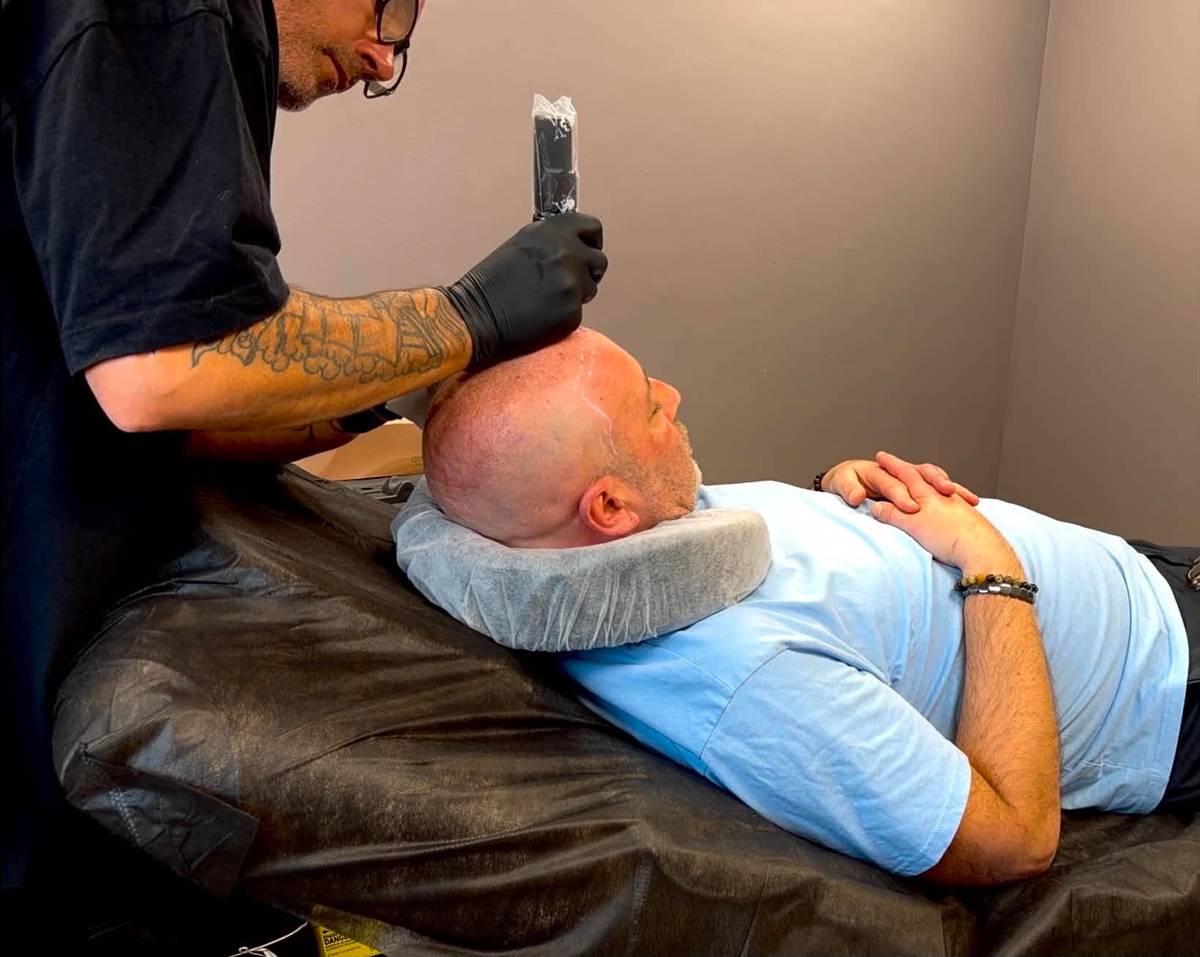
Scalp micropigmentation softens gradually over several years. A touch-up session refreshes the pigment so your look stays sharp and consistent.
Touch-Up is one form of scalp micropigmentation - see the complete guide to how it works, or browse real scalp micropigmentation before and after results.
Typically 1 session, about 3 hours per session.
Who is this treatment for?
A touch-up suits anyone whose scalp micropigmentation has softened or lightened over the years and wants it looking sharp again - that natural fading is normal, not a fault. SMP typically holds its depth and colour for around three to seven years before it visibly softens, so most touch-ups land somewhere in that window rather than on a fixed schedule; skin type and how much sun the scalp has had both affect exactly when. It also suits people who had SMP done elsewhere and feel it has gone patchy, too warm in tone, or sits too low or high, and want it reassessed and refreshed. Whoever did the original work, you are welcome here.
What happens during the session?
It starts with looking closely at the work you already have, in good light, to see how the pigment has aged and where it has faded most. Stephen colour-matches to your healed tone - older SMP can shift slightly over time - then re-deposits where density has thinned and redefines the hairline and edges. Beyond simply refreshing what has faded, this is also the point where small adjustments can be made if you want them: softening or gently reshaping the hairline, adding a touch more density to an area that has thinned further since the original work, or evening out a section left lighter than the rest. These are modest changes within the existing design rather than a full redesign, and Stephen will talk through what is realistic for your scalp before starting. It is usually one session of a few hours, focused only on the areas that need it rather than redoing everything.
What results can you expect?
Done well, a touch-up brings back the crispness and an even, consistent colour across the scalp, so faded or blotchy patches blend back in with the rest. Where another artist's work is being corrected, the aim is to soften what was bothering you and bring the overall look closer to what you wanted. Individual results vary with your skin and how the existing pigment has aged, and we will be honest about that at your consultation.
What is the aftercare?
Aftercare is gentler than a full treatment because less of the scalp is worked on, but it matters. For the first few days keep the area dry and avoid heavy sweating, swimming, saunas, steam and direct sun, and skip the gym until any redness settles. Do not pick or scrub. Once healed, light moisturising and daily SPF help the refreshed pigment hold its colour for longer. Good aftercare after a touch-up matters just as much as it did the first time, because it is one of the main things within your control that affects how long the refreshed colour lasts before it needs attention again - daily SPF on any exposed scalp is the single biggest factor, since UV exposure is what fades pigment fastest, though skin type also plays a part and varies from person to person. You will get full written aftercare on the day.
Common questions
Will you touch up SMP done by another artist?
Yes. We touch up and refresh work done elsewhere all the time, and you do not need to have been an existing client of ours to book one in. Everything starts with a free consultation, in person or by video call, where Stephen looks at the existing pigment closely and assesses it honestly, including how it has aged and whether the shade or hairline need adjusting. Occasionally older work needs more than a single refresh session to bring it back to a consistent, natural finish, and if so we will tell you straight rather than overpromise what one session can achieve.
How often do I need a touch-up?
There is no fixed schedule: SMP fades gradually over several years rather than on any set date, so it is never a case of a treatment simply expiring. Most people come back for a refresh somewhere in the region of every few years, when they personally notice the look softening, lightening or losing some of its original crispness. Sun exposure, skin type and how well the original aftercare was followed all play a part in how long it holds, so it really does vary from person to person rather than following a fixed rule. A touch-up is usually a shorter, simpler session than the original treatment, focused only on refreshing what has faded.
Can faded or patchy SMP be corrected?
In most cases, yes. Fading is normal, and re-depositing pigment usually evens it back out to a consistent shade across the whole area. Patchy or inconsistent areas, including work that was uneven to begin with, can often be blended in so they read as one settled result rather than several different tones. The honest answer depends on the original work, your skin, and how the pigment has aged, which is why we always assess it first at a free consultation before committing to anything or quoting a price. Where correction would need more than one session to look right, we will say so plainly rather than promise a quick fix that undersells the work involved.
Does scalp micropigmentation hurt?
Most clients describe SMP as mild discomfort rather than pain, comparable to a light scratching sensation. Everyone feels it slightly differently, and how sensitive you are can vary across the scalp, with the hairline and areas over bone often a little more noticeable than the softer areas further back. Numbing options are discussed at your consultation, so you can decide what suits you before we begin. Sessions typically last a few hours, with short breaks whenever you need them, and the work is built up gradually rather than rushed. Any redness usually settles within 24 to 48 hours, and most people are comfortable returning to normal activities the same day. If you have a low pain threshold or any concerns at all, raise them at the consultation and we will plan around you. Individual experiences vary, and we will never pretend a treatment is completely sensation-free.