
From the studio
Receding Hairline Treatment: What Really Works (and the Honest Third Option)
Noticing your hairline creep back at the temples? An honest look at every receding hairline treatment, from minoxidil to a transplant, what each really does at the front, and where SMP fits if regrowth is not for you.
Real client transformations
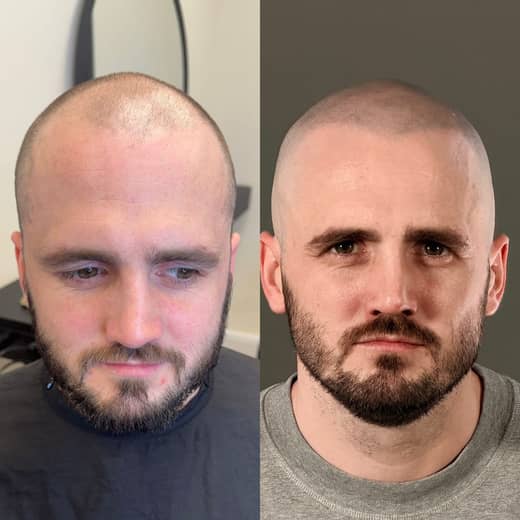
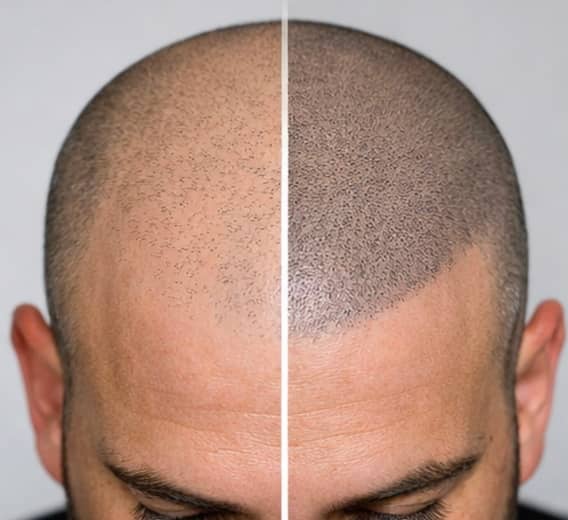
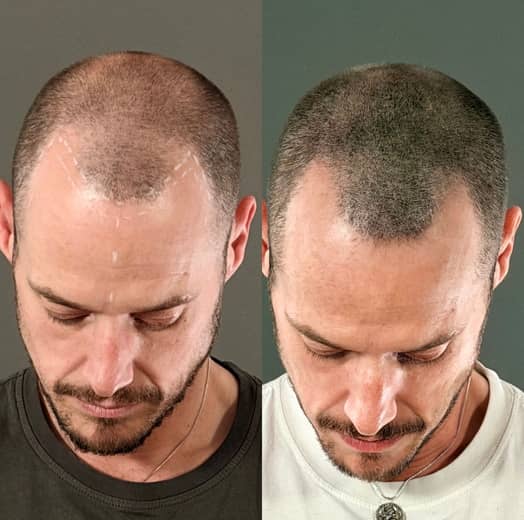
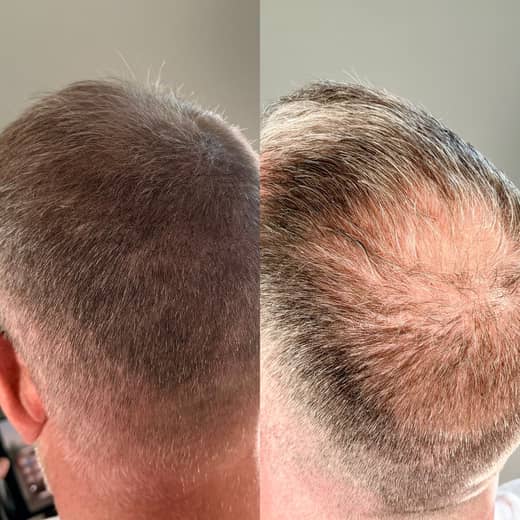
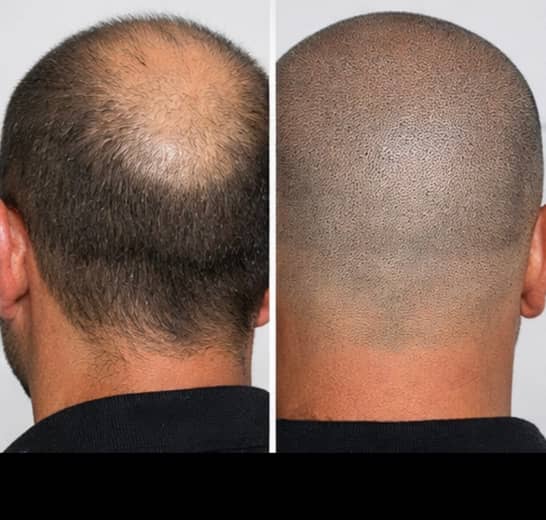
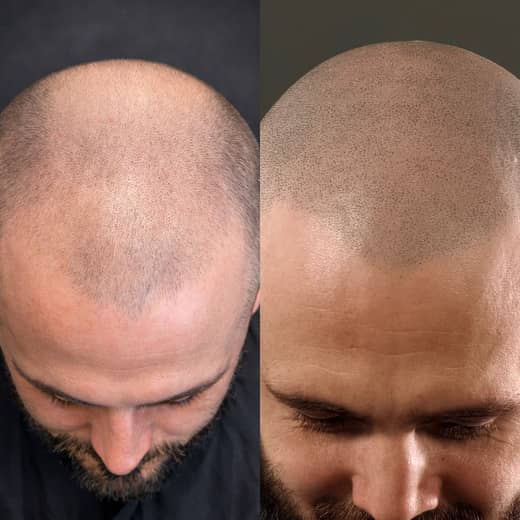
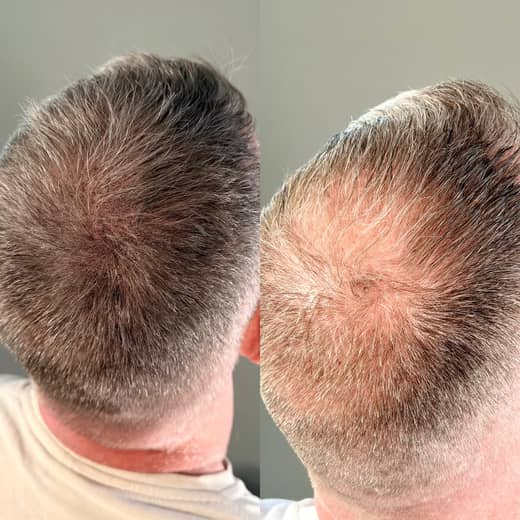
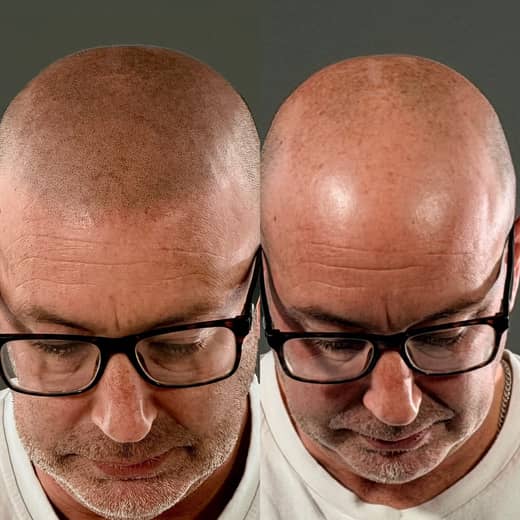
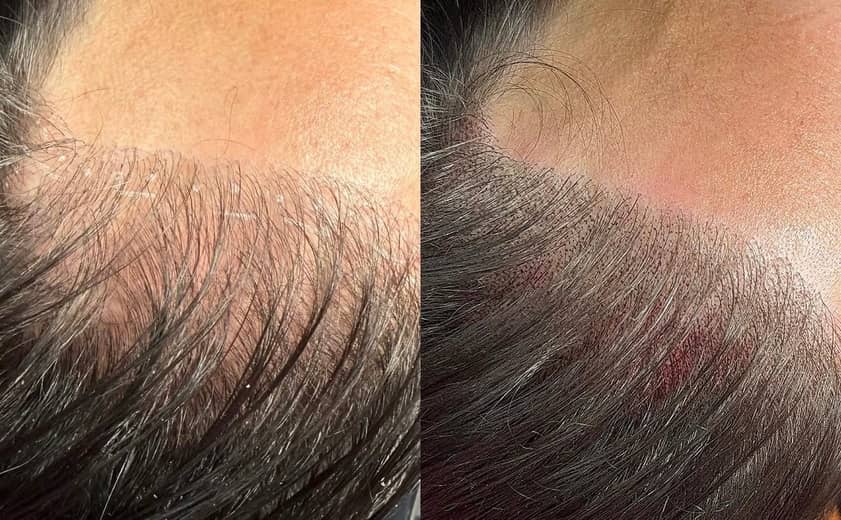
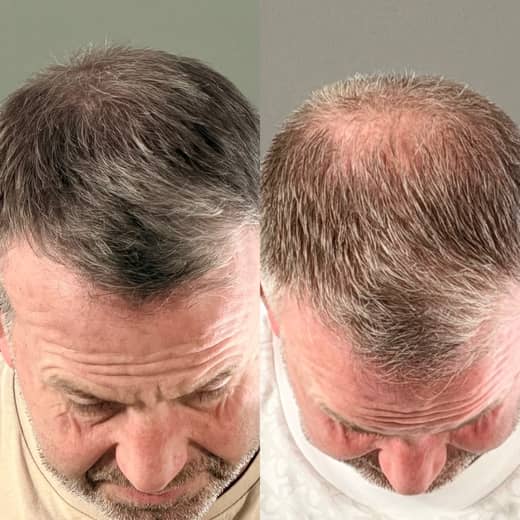
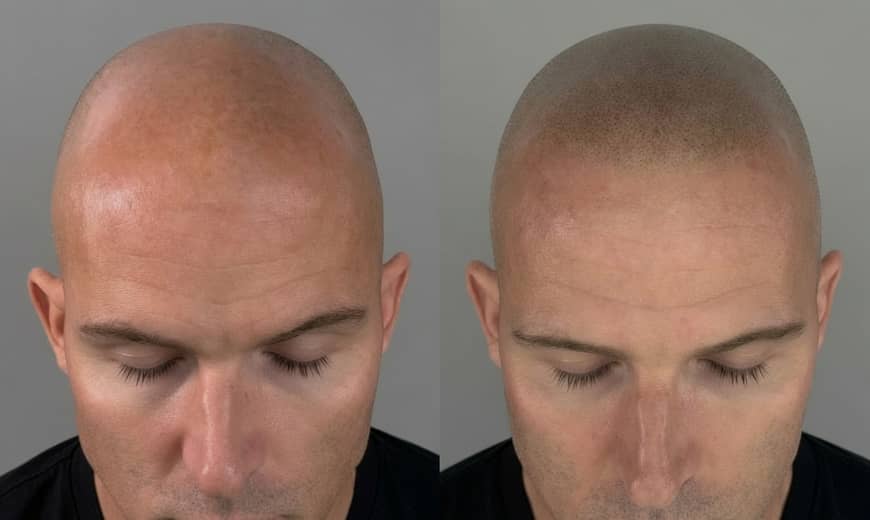
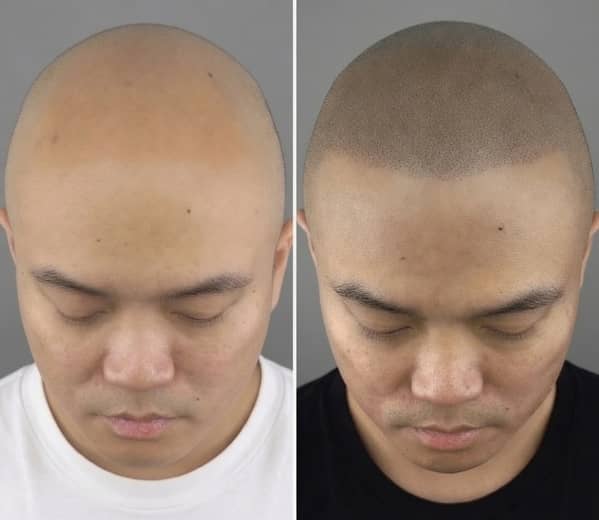
Watching your hairline inch back is a strange thing. It rarely happens overnight; you just notice one day that the temples have opened up, the parting sits further back than it used to, and the forehead in photos looks a little bigger than it did a few years ago. The honest questions underneath are simple: is this going to keep going, and what actually works to stop it? Here is a straight answer, including the option the regrowth pages tend to leave out.
The short answer
A receding hairline is nearly always male pattern hair loss: genetic, driven by the hormone DHT, and permanent. Minoxidil and finasteride can slow it and regrow some hair while you keep using them, though they work least well right at the front; a hair transplant rebuilds the hairline surgically. Scalp micropigmentation takes a different route, it does not grow hair, but it recreates the look of a sharp, natural hairline. The right choice comes down to whether you want regrowth or simply want the hairline to look restored.
What a receding hairline actually is
A receding hairline is the frontal edge of male pattern hair loss. It usually starts at the two temporal corners, which retreat first, then the hairline settles into the classic M shape as the point in the middle holds on longest. MedlinePlus Genetics describes the pattern plainly: hair loss “begins above the temples” and “the hairline gradually recedes to form a characteristic ‘M’ shape.” The hair at the sides and back, by contrast, is genetically tougher and usually stays put, which is exactly why a transplant is possible at all.
There is an important distinction here. A slightly higher, even hairline that settles in your late teens or twenties and then stops is often just a mature hairline, not balding. A hairline that keeps creeping back year on year, with soft wispy hairs at the new edge, is the pattern kind. If you are not yet sure which of the two you are looking at, it is worth working through the three checks in our guide to telling a mature hairline from a receding one before you spend anything. Dermatologists grade the balding version on the Norwood scale, where the first stages of real temple recession are the point it is recognised as pattern loss rather than a normal mature hairline. Before weighing up any treatment, a shorter, more textured cut is worth trying first: our guide to hairstyles for thinning hair covers which cuts genuinely soften a receding hairline, for free.

Why it happens, honestly
For the great majority of men, a receding hairline is androgenetic alopecia, or male pattern hair loss. The NHS is clear that this type “is permanent” and “usually runs in the family.” It is driven by DHT, a hormone your body makes from testosterone, which acts on follicles that are genetically sensitive to it and makes them miniaturise, producing a finer, shorter hair each cycle until the front of the scalp shows through.
It is also extremely common, so you are in good company. Reference data published by the US National Institutes of Health finds roughly half of men show some degree of pattern hair loss by the age of fifty, rising to around eighty per cent by seventy. It can start early, too, sometimes in the twenties. None of that makes it less annoying when it is your hairline, but it does mean the treatment options are well trodden rather than experimental.
It also means the habit you have been blaming is probably innocent. Caps are the one men raise most often, and the twin evidence points the other way entirely, which we go through in do hats cause hair loss. And if what actually prompted you to look is a heavier shed rather than a hairline that has visibly moved, it is worth ruling out normal seasonal hair shedding first, especially if it started this autumn.
What we would say at a consultation
Before you weigh any treatment, get clear on one question: do you want to keep and regrow your own hair, or do you simply want your hairline to look sharp again? That one question sorts the options faster than anything else. If regrowth is the goal, the medical routes come first and early. If it is the look you care about, scalp micropigmentation can get you there with no drugs and no surgery.
Can a receding hairline grow back?
Not on its own. Once pattern loss has taken hold at the hairline, the follicles will not recover by themselves, and Medical News Today puts it bluntly: “there is no cure for a receding hairline,” though some medications may slow it down. What you can do is hold the line and partly thicken early thinning with treatment, for as long as you keep it up. That is the honest ceiling, and it is worth knowing before you spend money on anything.
Receding hairline treatments compared
Most pages push whichever single product they sell. Here is the full set side by side, including the real catch with each one and how it performs specifically at the frontal hairline, which is a harder area than the crown for most treatments.
| Treatment | Works at the hairline? | Grows real hair? | Surgery or downtime? | Rough cost and upkeep |
|---|---|---|---|---|
| Watch and wait | No, it keeps receding | No | None | Free, but the loss continues |
| Minoxidil | Weakest here; best on the crown | Yes, while used | None | Ongoing, private, reverses if you stop |
| Finasteride | Slows loss, some regrowth | Yes, while used | None, a daily tablet | Ongoing, private, not for women |
| Laser or PRP | Mixed, weak evidence | Marginal at best | None; PRP is injections | Ongoing, adds up |
| Hair transplant | Yes, rebuilds it | Yes, your own hair | Surgery, 1 to 2 weeks off | £3,000 to £10,000+, one-off |
| Scalp micropigmentation | Yes, recreates the look | No, it is cosmetic | None | From £1,000, top-up every few years |
A few things that table cannot show. The “Laser or PRP” row deserves more than one line: if injections are on your shortlist, our honest look at whether PRP works for hair loss goes through the real evidence and the UK cost properly rather than the one-word “mixed” above. Minoxidil and finasteride are the two main medical treatments, and the NHS notes they “do not work for everyone” and “only work for as long as they’re used.” Minoxidil in particular has its strongest evidence on the crown, the area it was approved for, so on the frontal hairline it is working off-label and tends to help least. Finasteride is the more effective of the two at holding a hairline because it lowers DHT at the source; in the manufacturer’s trials just under half of men saw improved growth at one year and about two thirds by two years. It is a daily prescription tablet with a small risk of sexual side effects, and importantly the NHS is clear that “women should not use finasteride.”
A hair transplant is the one route that physically rebuilds the hairline with your own hair. It is genuine surgery, though: the NHS describes moving follicles from the back of the head, a recovery of “1 to 2 weeks off work,” a small risk “the transplant will not take,” and tiny permanent scars, and it “is not available on the NHS because it’s cosmetic surgery.” Cost is the other consideration: the NHS puts a UK transplant “anywhere between £1,000 and £30,000,” and in practice most hairline cases land somewhere in the low-to-mid thousands. Our guide to SMP versus a hair transplant lays the two out honestly.
The option the regrowth pages skip: SMP for a sharp hairline
If you would rather not chase regrowth with daily drugs or go through surgery, there is a third route that the medical and clinic pages almost never mention, because they do not offer it. Scalp micropigmentation recreates the appearance of a hairline by placing thousands of tiny pigment impressions in the skin that mimic the look of closely-shaved follicles. The NHS lists it among the cosmetic options for hair loss, describing it simply as a “tattoo used to look like short hair.”
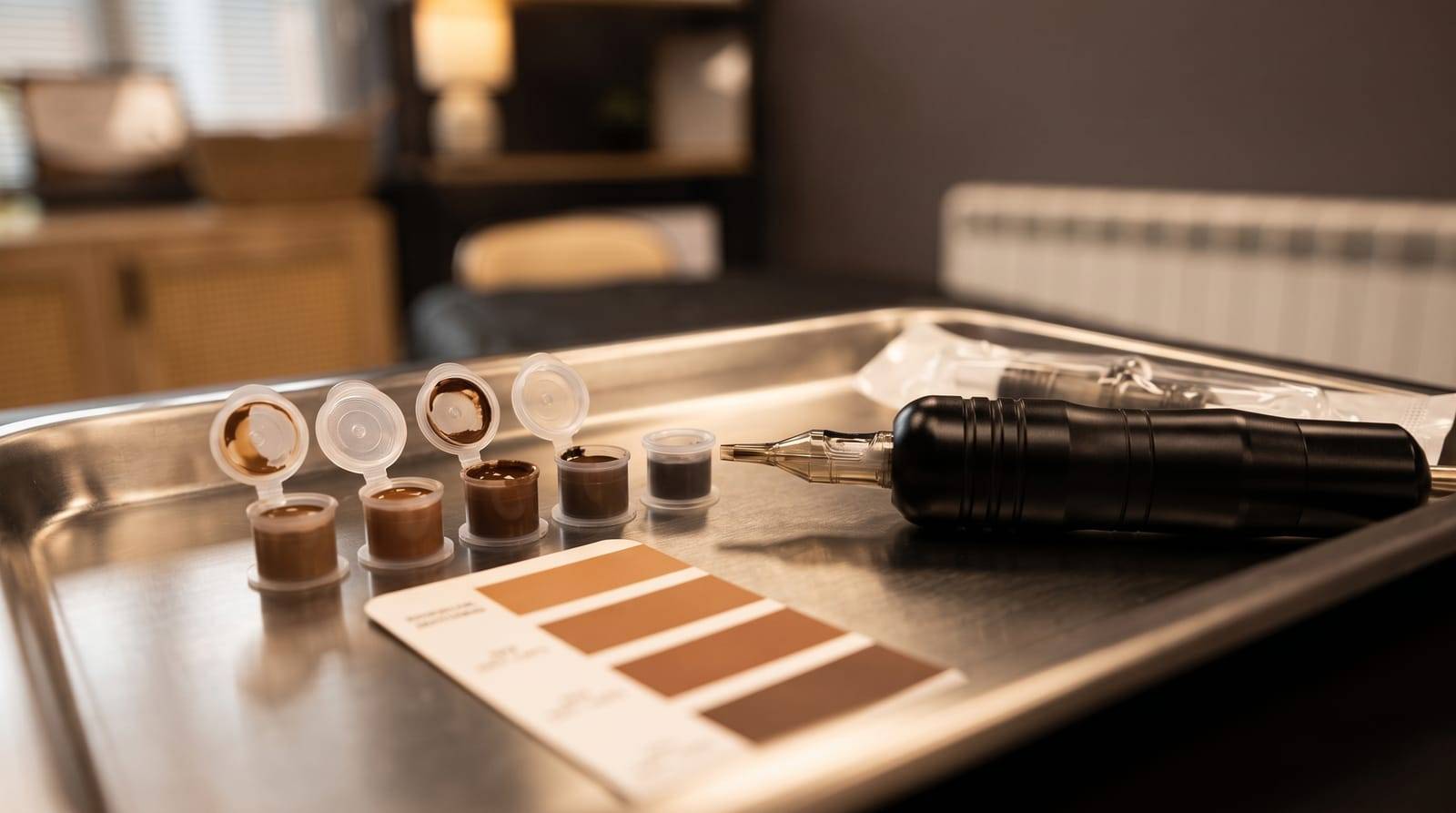
It works in two ways at the hairline. If you are already shaving or buzzing your hair short, a full SMP treatment recreates a crisp, natural-looking hairline across the front so a shaved head reads as a fresh close crop rather than a receding one, and if you are still weighing up the shave itself, our guide to shaving your head when you are balding covers the two looks and how to keep a buzz even. If you still have hair on top, density work can be blended in behind the front to soften the contrast where it is thinning. Two things stay true either way: SMP does not grow hair and does not stop the underlying loss, it changes how the hairline looks, not what is happening beneath the skin, and individual results vary.
A receding hairline at a glance
- The cause: almost always genetic male pattern hair loss, driven by DHT, and permanent.
- To slow or regrow it: finasteride and minoxidil help while you use them, but work least well at the front.
- To rebuild it surgically: a transplant restores your own hair, from around £3,000 upward, with real recovery.
- To simply look sharp again: SMP from £1,000 recreates the look of a clean hairline, no drugs, no surgery.
It is fair to add that SMP is not entirely maintenance-free. The pigment softens over several years and most people choose an occasional touch-up to keep the hairline crisp, so it is long-lasting rather than truly permanent. Set against a lifetime of daily tablets or a course of surgery, plenty of men find that a fair trade.
The real question at the hairline is not which treatment is best, it is whether you want your own hair back or simply want the receding to stop showing.
Which route is right for you?
Use that one honest question as the sort. If you still have decent coverage, you want to keep your own hair, and you are willing to stick with daily treatment, start early with finasteride or minoxidil and give them a fair run. If you want the hairline physically rebuilt and you have the donor hair and the budget for surgery, a transplant is the option that grows real hair at the front. If you are already shaving it, or you would rather not commit to drugs or an operation and simply want a sharp, defined hairline back, scalp micropigmentation is the genuine third route the regrowth clinics rarely put on the table.
The bottom line
A receding hairline is common, it is usually pattern hair loss, and it is manageable rather than curable. The medical routes can slow it and partly regrow it while you keep them up, a transplant can rebuild it surgically, and SMP can recreate the look of a clean hairline with no drugs and no downtime. The surest way to know which fits your hairline, and your expectations, is a proper look in person. A free consultation is the fastest way to a straight answer, and you can see what SMP costs in the UK on our transparent price list before you come in.
More from the blog
Autumn Hair Shedding in Men (2026): Normal or Something Else?
More hair in the brush this autumn than usual? For most men that is a normal, temporary seasonal shed, not the start of balding. Here is the honest test to tell the two apart, and what to do either way.

Do Hats Cause Hair Loss? What Actually Thins a Hairline
The hat myth has outlived the evidence. In a study of 92 identical twins, the daily hat wearers had less temple recession than their brothers, not more. So if it is not the cap, what is actually going on up there?

The Norwood Scale: The 7 Stages of Male Hair Loss (and What Helps)
Noticed your hairline receding or your crown thinning? The Norwood scale grades that pattern from stage 1 to 7. Here is how to find your stage, why it happens, and the honest options at each one.
Common questions
What causes a receding hairline?
In most men it is male pattern hair loss, which the NHS describes as permanent and something that usually runs in the family. A hormone called DHT gradually shrinks genetically sensitive follicles at the temples and front of the scalp, so the hairline retreats into the familiar M shape over years. Stress, illness, thyroid problems and low iron can thin hair too, but those tend to come on faster or more patchily, so if the change is sudden it is worth seeing a GP to rule them out.
Can a receding hairline grow back on its own?
Not if it is pattern hair loss. Once the follicles at the hairline have started to miniaturise, they will not recover without treatment, and there is no cure that reverses the process permanently. Medication can hold the line and partly thicken early thinning for as long as you take it, and a transplant can move hair into the gap surgically, but neither switches the loss off. This is why honest expectations matter more than any single product.
What is the best treatment for a receding hairline?
There is no single best treatment, only the one that fits what you want. If you want to keep and regrow your own hair, minoxidil and finasteride are the main medical options and work best started early, though both work least well right at the frontal hairline. If you want the hairline physically rebuilt, a hair transplant is the surgical route. If you would rather not commit to daily treatment or surgery, scalp micropigmentation recreates the look of a sharp hairline with pigment. A consultation is the honest way to match the route to your situation.
Does minoxidil work on a receding hairline?
Less well than most adverts suggest. Minoxidil has the strongest evidence on the crown, which is the area it was actually approved and trialled for; using it on the frontal hairline and temples is off-label, and the front is where it tends to help least. It can still be worth trying early, but it is not a cure, it only works while you keep applying it, and the regrowth falls out again if you stop. Manage your expectations at the hairline in particular.
Is a hair transplant worth it for a receding hairline?
For the right person, yes, but it is real surgery. A transplant moves your own DHT-resistant follicles to the hairline so you have hair you can style, and the hairline is one of the areas it suits best. The trade-offs are cost, a healing period of one to two weeks, tiny permanent scars at the donor area and the need for enough donor hair, and it is not available on the NHS. Results take roughly ten to eighteen months to mature. We compare it with SMP side by side in our SMP versus hair transplant guide.
How long does scalp micropigmentation last on the hairline?
SMP is long-lasting rather than truly permanent. Most people find the hairline holds its look for several years before the pigment softens, and a short top-up refreshes it, with sun exposure being the main thing that fades it faster. It does not grow hair or stop the underlying loss, and individual results vary, so we always look at your hairline in person and set honest expectations before starting.
Thinking about scalp micropigmentation?
Book a free, no-obligation consultation. We'll talk through your hair openly - no guarantees and no medical claims, just a clear idea of whether SMP is right for you.
Book a free consultation