
SMP Treatment
FUT & FUE Scar Camouflage SMP
Blends pigment into FUT/FUE hair-transplant scars and other scalp scarring to reduce their visibility within the surrounding hair.
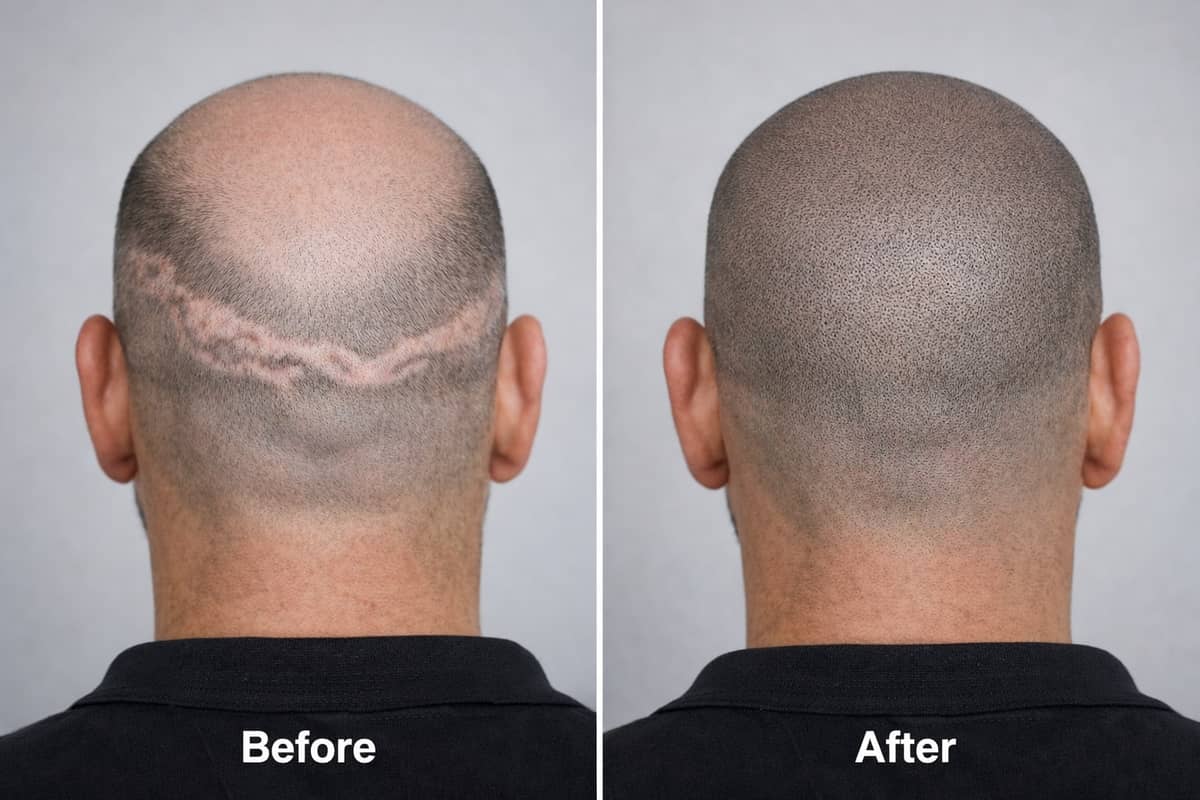
Scar Camouflage SMP reduces the appearance of hair-transplant scars (FUT and FUE) and other scalp scarring by blending pigment naturally with the surrounding hair, tailored to your skin tone, hair style and scar type.
Scar Camouflage is one form of scalp micropigmentation - see the complete guide to how it works, or read how SMP camouflages hair-transplant scars.
Typically 1-3 sessions, about 4 hours per session.
Who is this treatment for?
Scar camouflage SMP suits people carrying a visible scar on the scalp - most often a FUT (strip) scar or scattered FUE dot scars from a hair transplant, but also scars from surgery, stitches or an old injury. It works best when the scar sits within hair you keep fairly short, where the pale line or marks catch the light. If you have a brand-new or still-healing scar, it is usually worth waiting until it has fully settled first.
What happens during the session?
Scar tissue behaves differently from normal scalp - it can be smoother, paler, slightly raised or sunken, and it tends to hold pigment unevenly. Because of that, Stephen works carefully and often lighter to start, matching the dots to your skin tone and the surrounding hair, then building up over more than one pass. A small test patch may be done first to see how the scar takes the pigment, so the final blend is judged on how your skin actually responds rather than guesswork.
What results can you expect?
The aim is to reduce the contrast that makes a scar stand out, so it reads as part of the surrounding hair rather than a line your eye jumps to. Honestly, scars can be softened in appearance - not erased; the tissue is still there underneath. Results on scars vary more than on normal scalp, depending on the scar's depth, colour and texture, so some take pigment beautifully and others need extra work. Individual results vary, and we will always be straight with you about what is realistic.
What is the aftercare?
Scar tissue tends to take and hold pigment less evenly than normal scalp, so careful aftercare really matters here. For the first few days keep the area dry and clean, and avoid heavy sweating, swimming, saunas, scrubbing and direct sun while it settles. Try not to pick at any flaking over the scar, as that can disturb how the pigment beds in. A scar may shed or hold colour unevenly at first, which is normal and refined at your next session. Full written aftercare is provided.
Common questions
Can SMP cover a FUT or FUE hair-transplant scar?
Yes - this is one of the most common reasons people come to see us. For a FUT strip scar, pigment is blended along and around the line to break up the pale contrast against the surrounding hair; for FUE, the small dot scars are softened individually so they sit less obviously among the hair around them. It reduces how much the scarring stands out rather than removing it outright, since the tissue underneath is still there, and it works best with hair kept fairly short so the scar is genuinely blended in rather than simply hidden. Results depend on the scar itself, which is why Stephen assesses it honestly at a free consultation before agreeing a plan.
Will the pigment actually hold in scar tissue?
Often it does, but not always as predictably as it does on normal scalp. Scar tissue can be denser or smoother, so it sometimes takes pigment unevenly and may need more than one pass to even out across the whole scar. This is exactly why scar work is built up gradually over sessions rather than in one go, and why a small test patch is sometimes done first to see how your particular scar responds before committing to the full area. We would always rather under-do it on the first pass and add more at a later session than overload tissue that may not hold the pigment well.
What about a raised, shiny or very pale scar?
These are honestly the trickier ones to work with. A flat scar close to your natural skin tone blends most easily, while raised, shiny or very pale tissue can be harder to match and may show more limited improvement, since pigment can sit or heal differently on that kind of surface. We will look at your scar in person at consultation, discuss its texture and colour, and tell you plainly whether camouflage is likely to help a lot, a little, or is not the right option for that particular scar, with no overselling either way, and where results are likely to be limited we will say so honestly before you commit to any sessions.
Does scalp micropigmentation hurt?
Most clients describe SMP as mild discomfort rather than pain, comparable to a light scratching sensation. Everyone feels it slightly differently, and how sensitive you are can vary across the scalp, with the hairline and areas over bone often a little more noticeable than the softer areas further back. Numbing options are discussed at your consultation, so you can decide what suits you before we begin. Sessions typically last a few hours, with short breaks whenever you need them, and the work is built up gradually rather than rushed. Any redness usually settles within 24 to 48 hours, and most people are comfortable returning to normal activities the same day. If you have a low pain threshold or any concerns at all, raise them at the consultation and we will plan around you. Individual experiences vary, and we will never pretend a treatment is completely sensation-free.